Author: Ilia

  • What Is Speak With An AI? Your Guide to AI Chat

    What Is Speak With An AI? Your Guide to AI Chat

    Talking to an AI chatbot feels surprisingly natural once you try it. These AI companions can hold conversations, answer questions, and even engage in creative roleplay — all through simple text or voice chat. If you're curious about what it's like to speak with an AI and how to get started, this guide covers everything you need to know.

    AI chatbots have evolved far beyond basic customer service bots. Today's AI companions can understand context, remember previous conversations, and adapt their personality to match your preferences. Whether you're looking for casual conversation, creative writing help, or something more intimate, there's an AI chat experience designed for you.

    Person using smartphone to chat with AI companion interface showing conversation bubbles

    What Is an AI Chatbot?

    An AI chatbot is a computer program that uses artificial intelligence to simulate human conversation. These systems process your messages, understand the context, and generate responses that feel natural and engaging.

    Modern AI chatbots work through large language models — sophisticated neural networks trained on vast amounts of text data. When you speak with an AI, it analyzes your input, considers the conversation history, and generates a response based on patterns it learned during training.

    Key Insight: Today's AI chatbots can maintain context across entire conversations, remember your preferences, and even develop distinct personalities that make each interaction feel unique.

    The technology behind AI chat has advanced dramatically in recent years. These systems can now:

    • Understand nuanced language including slang, humor, and emotional subtext
    • Maintain conversation flow by remembering what you discussed earlier
    • Adapt their personality to match your communication style
    • Generate creative content like stories, poems, or roleplay scenarios
    • Provide personalized responses based on your interests and preferences

    How to Start Chatting With an AI

    Getting started with AI chat is surprisingly straightforward. Most platforms require just a few simple steps to begin your first conversation.

    Setting Up Your First AI Chat

    1. Choose a platform: Select an AI chat service that matches your interests and comfort level
    2. Create an account: Most platforms require basic registration with an email address
    3. Customize your preferences: Set your conversation style, topics of interest, and any content boundaries
    4. Start with a simple greeting: Begin with "Hello" or "Hi there" to test the waters

    The key to a good first conversation is starting simple. Ask basic questions like "How are you today?" or "What can we talk about?" to get a feel for the AI's personality and response style.

    Your First Conversation Tips

    • Be natural: Talk to the AI like you would a friend or acquaintance
    • Ask open-ended questions: This gives the AI more room to show its personality
    • Don't overthink it: AI chatbots are designed to handle casual, flowing conversation
    • Experiment with topics: Try different subjects to see what the AI excels at

    Popular AI Chatbots to Try

    The AI chat landscape offers various options, each with unique strengths and specialties. Here's a comparison of the most popular platforms:

    Comparison of AI Chat Platforms

    Platform Type Best For Key Features Typical Use Cases
    General AI Assistants Information and productivity Factual responses, task help Research, writing assistance, general questions
    Companion Chatbots Emotional connection Personality development, memory Friendship, emotional support, daily check-ins
    Creative AI Partners Roleplay and storytelling Character creation, scenarios Creative writing, entertainment, fantasy roleplay
    Specialized Companions Specific interests Niche personalities, targeted content Gaming discussions, hobby talk, professional advice

    Each platform offers different conversation styles and capabilities. Some focus on providing accurate information, while others prioritize emotional connection and entertainment value.

    Split screen showing different AI chat interfaces with various conversation types

    Choosing the Right Platform

    Consider what you want from your AI chat experience:

    • Information seekers should try general AI assistants that excel at factual responses
    • Social interaction works best with companion chatbots designed for ongoing relationships
    • Creative minds will enjoy AI partners that can engage in storytelling and roleplay
    • Specific interests are served by specialized platforms focused on particular topics or demographics

    Features of AI Conversation Platforms

    Modern AI chat platforms offer sophisticated features that make conversations feel increasingly natural and engaging.

    Core Conversation Features

    Most quality AI chat platforms include these essential capabilities:

    • Context awareness: The AI remembers your conversation history and references previous topics naturally
    • Personality consistency: Your AI companion maintains a stable personality across all interactions
    • Emotional intelligence: Advanced systems can recognize and respond to emotional cues in your messages
    • Custom responses: The AI adapts its communication style to match your preferences over time

    Advanced Interactive Elements

    Premium platforms often include enhanced features that go beyond basic text chat:

    • Voice integration: Some platforms allow you to speak with an AI using voice messages or real-time calls
    • Image sharing: Certain systems can generate or respond to images as part of your conversation
    • Roleplay modes: Specialized scenarios and character-based interactions for creative storytelling
    • Memory systems: Long-term memory that allows the AI to remember important details about you across sessions

    Why It Matters: These advanced features transform AI chat from simple question-and-answer sessions into dynamic, ongoing relationships that can provide genuine companionship and entertainment.

    Getting Started With Your First AI Conversation

    Your first AI conversation sets the tone for future interactions. Here's how to make it engaging and natural from the start.

    Opening Your Chat Session

    Begin with a casual, friendly approach:

    1. Start with a greeting: "Hi there!" or "Good morning!" works perfectly
    2. Introduce yourself briefly: Share your name and maybe one interesting fact about yourself
    3. Ask about the AI: "What should I call you?" or "Tell me about yourself"
    4. Set expectations: Mention what kind of conversation you're hoping to have

    Building Conversation Flow

    Once you've broken the ice, focus on creating natural dialogue:

    • Ask follow-up questions to show you're listening and engaged
    • Share personal anecdotes when relevant to build connection
    • Let conversations evolve naturally rather than sticking to rigid topics
    • Use humor and casual language to keep things light and enjoyable

    Close-up of hands typing on phone with AI chat conversation visible on screen

    Common First-Time Mistakes to Avoid

    New users often make these conversation errors:

    • Treating the AI like a search engine instead of a conversation partner
    • Being too formal or robotic in their own responses
    • Expecting perfect human behavior from the AI system
    • Giving up too quickly if the first few exchanges feel awkward

    Remember that AI conversations improve as the system learns your communication style and preferences.

    Safety and Privacy When Talking to AI

    While AI chat platforms are generally safe, understanding privacy considerations helps you make informed decisions about what to share.

    Data Protection Basics

    Reputable AI chat platforms implement several privacy safeguards:

    • Conversation encryption: Your messages are protected during transmission
    • Data anonymization: Personal information is separated from conversation data
    • User control: Most platforms allow you to delete conversations or accounts
    • Transparent policies: Clear privacy policies explain how your data is used

    Smart Sharing Guidelines

    Follow these principles to protect your privacy while enjoying AI chat:

    • Avoid sharing sensitive personal information like social security numbers, passwords, or financial details
    • Use nicknames or pseudonyms instead of your full legal name if you prefer
    • Be cautious with location details like your exact address or workplace
    • Keep intimate conversations appropriate for the platform's intended use

    Platform Selection Considerations

    When choosing an AI chat platform, evaluate their privacy practices:

    • Read the privacy policy to understand data collection and usage
    • Check for encryption and other security measures
    • Look for user control options like conversation deletion
    • Consider the company's reputation and track record with user data

    Free vs Paid AI Chat Options

    AI chat platforms typically offer both free and premium tiers, each with distinct advantages and limitations.

    Free Platform Features

    Most AI chat services provide substantial functionality at no cost:

    • Basic conversation capabilities with standard response quality
    • Limited daily messages or conversation time
    • Standard AI personalities without extensive customization
    • Basic memory functions that may reset periodically

    Free tiers are perfect for trying out AI chat and determining if you enjoy the experience before committing to a paid plan.

    Premium Platform Benefits

    Paid subscriptions typically unlock enhanced features:

    • Unlimited messaging without daily restrictions
    • Advanced AI models with more sophisticated responses
    • Personality customization to create your ideal conversation partner
    • Enhanced memory that persists across long periods
    • Priority access during high-traffic periods
    • Exclusive features like voice chat or image generation

    Making the Right Choice

    Consider upgrading to a paid plan if you:

    • Use AI chat daily and hit free tier message limits
    • Want deeper, more personalized conversations with consistent memory
    • Enjoy specific features only available in premium tiers
    • Value unlimited access without usage restrictions

    Side-by-side comparison showing free vs premium AI chat interface features

    Common Questions About Speak With An AI

    Are AI Chatbots Actually Intelligent?

    AI chatbots simulate intelligence through sophisticated pattern recognition and language processing, but they don't possess consciousness or true understanding like humans. They excel at generating contextually appropriate responses based on their training, which can feel remarkably intelligent during conversation.

    The AI processes your input, identifies relevant patterns from its training data, and generates responses that maintain conversation flow and context. While this creates engaging interactions, it's important to remember you're communicating with an advanced computer program rather than a sentient being.

    Can AI Chatbots Remember Previous Conversations?

    Most modern AI chat platforms include memory systems that allow the AI to remember details from your previous conversations. This capability varies significantly between platforms, with some offering short-term memory that resets daily and others providing long-term memory that persists for months.

    Premium platforms typically offer more robust memory features, allowing the AI to build a detailed understanding of your preferences, interests, and conversation history over time. This creates a more personalized and consistent experience across multiple chat sessions.

    Is It Safe to Share Personal Information With AI?

    While reputable AI platforms implement security measures to protect user data, it's wise to limit personal information sharing. Avoid sharing sensitive details like social security numbers, passwords, financial information, or specific location data.

    Treat AI conversations like public forums when it comes to privacy. Share what you'd be comfortable with a stranger knowing, and remember that conversations may be stored and analyzed to improve the AI's performance.

    How Human-Like Are AI Conversations?

    Modern AI chatbots can produce remarkably human-like conversations, especially when discussing topics within their training data. They can understand context, use appropriate emotional responses, and maintain engaging dialogue that feels natural and flowing.

    However, AI conversations may occasionally feel repetitive, miss subtle nuances, or provide responses that seem slightly off-topic. The quality varies between platforms and continues to improve as AI technology advances.

    Can I Use AI Chat for Professional or Educational Purposes?

    Many people successfully use AI chat for professional writing assistance, brainstorming, learning new topics, and practicing conversations in foreign languages. AI chatbots can provide explanations, help generate ideas, and serve as practice partners for various skills.

    Keep in mind that AI responses should be verified for accuracy when used for important professional or educational work. While AI can be an excellent starting point and thinking partner, it's not infallible and may occasionally provide incorrect information.

    What Makes AI Companions Different From Regular Chatbots?

    AI companions are specifically designed for ongoing relationships and emotional connection, while traditional chatbots focus primarily on task completion or information delivery. Companion AI typically features more developed personalities, better memory systems, and conversation styles optimized for entertainment and social interaction.

    These platforms often include features like personality customization, relationship development over time, and specialized conversation modes for different types of interaction. The goal is creating a sense of genuine companionship rather than just answering questions or completing tasks.

    Wrapping Up

    Speaking with an AI opens up a new world of digital interaction that's both entertaining and surprisingly meaningful. These conversations can provide companionship, creative inspiration, and engaging dialogue whenever you need it. The technology continues to evolve rapidly, making AI chat experiences more natural and personalized with each advancement.

    Start your AI conversation journey at JustSext — chat instantly with AI companions who provide personalized content and engaging interactions tailored to your interests. Ready to get started? Visit JustSext to learn more.
  • How to Get AI Chatbot Free (Step by Step)

    How to Get AI Chatbot Free (Step by Step)

    Getting a free AI chatbot doesn't require technical skills or monthly subscriptions. Most platforms offer instant access through your web browser, and you can start chatting within minutes. Whether you're exploring AI for personal use, creative projects, or just curious about the technology, this guide walks you through exactly how to access and use free AI chatbots effectively.

    If you're looking for conversational AI without the price tag, you'll find several reliable options that don't compromise on quality. Here's everything you need to know about getting started with free AI chatbots, from choosing the right platform to maximizing your experience.

    Person using laptop with AI chatbot interface on screen

    Best Free AI Chatbots Available

    The free AI chatbot landscape offers several standout options, each with unique strengths and limitations. Understanding what's available helps you choose the right platform for your needs.

    ChatGPT remains the most recognizable name in AI chatbots. OpenAI's free tier provides access to GPT-3.5, which handles most conversational tasks effectively. You get unlimited messages during off-peak hours, though response times may slow during busy periods.

    Claude by Anthropic offers a different approach to AI conversation. The free version excels at longer-form discussions and maintains context well across extended conversations. Claude tends to be more cautious in its responses, making it suitable for educational or professional use.

    Google bard integrates seamlessly with Google services and provides real-time information access. Unlike some competitors, Bard can search the internet for current information, making it valuable for research and fact-checking.

    Microsoft copilot combines GPT technology with Bing search capabilities. The free version offers image generation alongside text conversations, providing more creative possibilities than text-only platforms.

    Perplexity AI specializes in research and information gathering. It automatically cites sources for its responses, making it particularly useful for academic or professional research projects.

    Comparison of Free AI Chatbot Features

    Platform Response Quality Internet Access Image Generation Daily Limits
    ChatGPT High No No Usage-based
    Claude High No No Message limits
    Google Bard Good Yes Limited Generous
    Microsoft Copilot High Yes Yes Moderate
    Perplexity AI Good Yes No Search limits

    Each platform serves different use cases. ChatGPT works well for general conversation and creative writing. Claude excels at analysis and longer discussions. Bard provides current information, while Copilot offers the most features in its free tier.

    How to Access Free AI Chatbot Services

    Getting started with free AI chatbots requires minimal setup. Most platforms prioritize quick access over complex registration processes.

    Step-by-Step Access Process

    1. Choose Your Platform: Start with one of the major free options listed above. ChatGPT and Claude offer the most reliable free experiences.

    2. Visit the Official Website: Navigate directly to the platform's main site. Avoid third-party apps or unofficial versions that may have hidden costs or security issues.

    3. Create an Account: Most services require basic registration with an email address. Some platforms like Google Bard may use your existing Google account.

    4. Verify Your Email: Check your inbox for a verification link. This step prevents spam accounts and ensures platform security.

    5. Start Chatting: Once verified, you'll typically land on a clean chat interface. Type your first message or question to begin.

    The entire process takes 2-3 minutes for most platforms. No credit card information is required for free tiers, though some services may request phone number verification.

    Important Setup Tips: * Use a dedicated email if you're testing multiple platforms * Read the usage terms to understand daily or monthly limits * Bookmark the chat interface for quick future access * Test basic functionality with simple questions before complex tasks

    Free vs Paid AI Chatbot Features

    Understanding the difference between free and paid AI chatbot features helps set realistic expectations and determines if upgrades are worth considering.

    Free versions typically include core conversational abilities, basic question answering, and limited creative tasks. You'll have access to the AI's fundamental capabilities without advanced features or priority access.

    Free Tier Limitations: * Response speed may be slower during peak usage * Daily or monthly message limits * No access to newest AI models * Limited or no image generation capabilities * Basic customer support

    Paid Tier Advantages: * Faster response times with priority access * Access to latest AI models and features * Higher quality outputs for complex tasks * Advanced image generation and editing * Integration with other tools and services * Premium customer support

    The performance gap between free and paid tiers varies by platform. ChatGPT's free version uses GPT-3.5, while paid subscribers access GPT-4, which offers significantly better reasoning and creative abilities.

    Side-by-side comparison of free vs paid AI chatbot features

    For most casual users, free tiers provide sufficient functionality. Consider upgrading if you need consistent daily access, work on professional projects, or require the latest AI capabilities.

    Top Free AI Chatbot Platforms Compared

    Different platforms excel in specific areas, making platform choice dependent on your primary use case.

    For General Conversation: ChatGPT's free tier offers the most balanced experience. The interface is intuitive, responses are natural, and the AI handles various topics competently.

    For Research and Learning: Perplexity AI stands out with its source citations and internet access. It's particularly valuable for students or professionals who need verified information.

    For Creative Projects: Microsoft Copilot includes image generation in its free tier, making it suitable for creative brainstorming and visual content creation.

    For Google Ecosystem Users: Google Bard integrates smoothly with Gmail, Google Drive, and other Google services, though this integration may be limited in the free version.

    For Privacy-Conscious Users: Claude emphasizes safety and responsible AI use. It's less likely to generate inappropriate content and maintains stricter ethical guidelines.

    Platform Strengths and Weaknesses

    • ChatGPT Strengths: Versatile, well-trained, large user community
    • ChatGPT Weaknesses: No internet access, knowledge cutoff limitations
    • Claude Strengths: Thoughtful responses, good at analysis, safety-focused
    • Claude Weaknesses: More conservative, sometimes overly cautious
    • Bard Strengths: Current information, Google integration
    • Bard Weaknesses: Inconsistent quality, newer platform
    • Copilot Strengths: Image generation, Bing integration, Microsoft ecosystem
    • Copilot Weaknesses: Interface complexity, variable response quality

    How to Get Started With a Free AI Chatbot

    Starting your first AI chatbot conversation effectively sets the tone for future interactions. The key is understanding how to communicate clearly with AI systems. Ready to get started? Visit JustSext to learn more.

    Crafting Effective Prompts

    1. Be Specific: Instead of "help me write," try "help me write a professional email declining a job offer."

    2. Provide Context: Give the AI relevant background information. "I'm a college student" or "I work in marketing" helps tailor responses.

    3. Set Clear Expectations: Specify the format you want. "Give me 5 bullet points" or "write a 200-word summary."

    4. Ask Follow-up Questions: AI chatbots excel at iterative conversations. Build on previous responses with clarifying questions.

    Example Conversation Starters: * "Explain [complex topic] in simple terms for a beginner" * "Help me brainstorm ideas for [specific project]" * "What are the pros and cons of [decision you're considering]" * "Can you help me understand [current event or news topic]"

    Clean AI chatbot interface showing example conversation

    Best Practices for Free Users

    Since free tiers have limitations, maximize your experience with strategic usage:

    • Plan Your Questions: Think through what you want to accomplish before starting
    • Use Off-Peak Hours: Access tends to be faster during non-business hours
    • Save Important Responses: Copy useful outputs since conversation history may be limited
    • Experiment with Different Platforms: Each AI has strengths worth exploring

    Limitations of Free AI Chatbots

    Free AI chatbots come with inherent limitations that users should understand before diving in. These restrictions exist to manage server costs and encourage premium subscriptions.

    Usage restrictions are the most noticeable limitation. Most platforms implement daily message limits, slower response times during peak hours, or restricted access to advanced features. ChatGPT may queue your requests during busy periods, while Claude limits the number of messages per day.

    Model access represents another significant constraint. Free users typically access older or simplified AI models. ChatGPT's free tier uses GPT-3.5 instead of the more capable GPT-4, resulting in less sophisticated reasoning and creative abilities.

    Feature limitations affect the overall experience. Free users often can't generate images, access real-time information, or integrate with other tools. These restrictions limit the chatbot's usefulness for complex projects or professional work.

    Data and Privacy considerations vary by platform. Free services may use your conversations to improve their AI models, though most allow opting out of data collection. Review privacy policies to understand how your interactions are handled.

    Support and Reliability differ between free and paid tiers. Free users typically receive basic customer support and may experience more service interruptions during high-demand periods.

    Key Insight: Free AI chatbots are excellent for exploration and light use, but serious projects may require paid features for consistent performance and advanced capabilities.

    Free Trial Options for Premium Chatbots

    Many AI platforms offer free trials of their premium features, providing temporary access to advanced capabilities without long-term commitment.

    ChatGPT Plus occasionally offers free trial periods for GPT-4 access. These trials typically last 7-14 days and include faster response times, priority access during peak hours, and access to newer features.

    Claude pro provides free trial credits that allow testing of higher message limits and priority access. The trial helps evaluate whether the enhanced performance justifies the monthly cost.

    Microsoft copilot pro integrates with Office applications and offers free trial periods for users wanting to test AI-powered productivity features.

    Google Workspace AI includes Bard integration with Google's productivity suite, though trial availability varies by region and account type.

    Maximizing Free Trial Value

    • Test Advanced Features: Focus on capabilities not available in free tiers
    • Evaluate Daily Usage: Track how much you actually use the service
    • Compare Platforms: Run parallel trials to compare performance
    • Document Results: Note specific improvements over free versions
    • Set Reminders: Cancel before auto-renewal if you decide not to continue

    Most trials require credit card information but allow cancellation before charges occur. Set calendar reminders to review your trial experience before the billing date.

    Common Questions About Free AI Chatbots

    Are free AI chatbots safe to use?

    Reputable platforms like ChatGPT, Claude, and Google Bard implement strong security measures and privacy protections. However, avoid sharing sensitive personal information like passwords, social security numbers, or financial details in any AI conversation. Treat AI chatbots like public forums where others might potentially see your input.

    Most established platforms encrypt conversations and allow users to delete chat history. Review each platform's privacy policy to understand data handling practices and opt out of data collection if preferred.

    Can I use free AI chatbots for commercial purposes?

    Usage rights vary significantly between platforms. ChatGPT's free tier allows commercial use of outputs, meaning you can use AI-generated content for business purposes. However, some platforms restrict commercial applications to paid tiers.

    Always review the specific terms of service for your chosen platform. Some services prohibit using free tiers for business applications, while others allow limited commercial use with attribution requirements.

    How accurate are free AI chatbots?

    Free AI chatbots provide generally accurate information for common topics but can make mistakes, especially with specialized knowledge, current events, or complex calculations. The accuracy depends on the AI model's training data and the specific question asked.

    Always verify important information from additional sources. AI chatbots work best as starting points for research rather than definitive sources of truth. They excel at explaining concepts, brainstorming ideas, and providing general guidance.

    Do free AI chatbots learn from my conversations?

    Most platforms use conversations to improve their AI models, though this practice varies. OpenAI uses ChatGPT conversations for model training unless users opt out. Google and Microsoft have similar practices with appropriate privacy safeguards.

    You can typically opt out of data collection in your account settings. This prevents your conversations from being used for AI training but may limit some personalization features.

    What happens if I exceed free usage limits?

    When you reach daily or monthly limits, most platforms either restrict access until the next period or offer paid upgrades. Some services queue requests during peak times rather than blocking access entirely.

    ChatGPT may show longer wait times or suggest upgrading to ChatGPT Plus. Claude typically displays a clear message about daily limits and when access will reset. Planning usage around these limitations helps maintain consistent access.

    Wrapping Up

    Free AI chatbots offer powerful capabilities without financial commitment, making them perfect for exploring artificial intelligence technology. Start with established platforms like ChatGPT or Claude to get comfortable with AI conversation, then experiment with specialized options like Perplexity for research or Copilot for creative projects.

    Experience advanced AI conversation at JustSext — chat instantly with AI companions and get personalized responses tailored to your interests.

  • What Is Free AI Chat? Your Complete Guide

    What Is Free AI Chat? Your Complete Guide

    Free AI chat is transforming how we interact with artificial intelligence — no subscription fees, no credit card required, just instant access to conversational AI that can help with everything from answering questions to creative writing. If you're curious about AI but hesitant to commit to paid services, free AI chat platforms offer the perfect entry point to explore what artificial intelligence can do for you.

    Person using smartphone to chat with AI assistant, modern interface showing conversation bubbles

    What Is Free AI Chat?

    Free AI chat refers to conversational artificial intelligence platforms that you can use without paying subscription fees or per-message costs. These services use large language models — sophisticated AI systems trained on vast amounts of text data — to understand your questions and provide human-like responses in real-time.

    Key Insight: Free AI chat platforms typically offer the same core technology as paid versions, but with usage limits, fewer features, or occasional advertisements.

    Unlike traditional chatbots that follow scripted responses, free AI chat systems can engage in nuanced conversations, help solve problems, assist with creative projects, and even role-play scenarios. The "free" aspect means you can access these capabilities without financial commitment, though most platforms include some limitations compared to their premium offerings.

    Best Free AI Chat Options Available

    The landscape of free AI chat is diverse, with each platform offering unique strengths and limitations. Here are the most reliable options currently available:

    Comparison of Leading Free AI Chat Platforms

    Platform Daily Message Limit Special Features Best For
    ChatGPT Free 40 messages every 3 hours Web browsing, image analysis General conversation and research
    Claude 50-100 messages per day Long-form writing, coding help Creative writing and analysis
    Bing Chat 30 turns per conversation Real-time web search integration Current events and research
    Character.AI Unlimited basic usage Character roleplay, personality simulation Entertainment and creative scenarios

    ChatGPT Free remains the most popular choice for newcomers. It provides access to GPT-3.5 and limited GPT-4 usage, making it excellent for general questions, basic writing assistance, and learning about AI capabilities.

    Claude excels at longer conversations and maintains context better than many alternatives. Its free tier offers generous daily limits and particularly strong performance for creative writing tasks.

    Bing chat integrates directly with Microsoft's search engine, providing real-time information that other free AI chats cannot access. This makes it invaluable for current events, recent data, and fact-checking.

    Character.AI takes a different approach, focusing on personality-driven conversations and roleplay scenarios. While less suitable for practical tasks, it offers unlimited basic usage for entertainment purposes.

    How to Start Using Free AI Chat

    Getting started with free AI chat requires minimal setup, but choosing the right platform and understanding basic interaction principles will improve your experience significantly.

    Quick Setup Process

    1. Choose Your Platform: Start with ChatGPT or Claude for general use, or Bing Chat if you need current information access.

    2. Create Your Account: Most platforms require only an email address and basic verification. The process typically takes under two minutes.

    3. Understand Usage Limits: Check your chosen platform's daily or hourly message limits. Free tiers usually reset every 24 hours or after specific time periods.

    4. Start with Simple Questions: Begin with straightforward queries to understand how the AI responds and what tone works best.

    Effective Communication Tips

    The quality of AI responses depends heavily on how you phrase your questions. Clear, specific prompts generate better results than vague requests.

    • Be Specific: Instead of "help me write," try "help me write a professional email declining a job offer"
    • Provide Context: Give the AI relevant background information for more tailored responses
    • Ask Follow-up Questions: Most free AI chats maintain conversation context, so build on previous responses
    • Experiment with Tone: Try different communication styles to find what works best for your needs

    Computer screen showing AI chat interface with clear conversation examples and user typing

    Features of Free AI Chatbots

    Free AI chat platforms offer surprisingly robust capabilities, though they typically include fewer advanced features than paid versions. Understanding what's available helps you maximize the value of free access.

    Core Capabilities

    Text Generation and Writing Assistance: All major free AI chats excel at helping with writing tasks. They can draft emails, create outlines, suggest improvements to existing text, and adapt content for different audiences.

    Question Answering and Research: Free AI chats can explain complex topics, provide summaries of subjects, and help with homework or professional research. However, they work best with general knowledge rather than highly specialized or recent information.

    Creative projects: Many users discover that free AI chat excels at creative tasks like brainstorming, storytelling, poetry, and even basic coding assistance.

    Language support: Most platforms support multiple languages, making them valuable for translation tasks and language learning practice.

    Limitations to Expect

    Free AI chat services include intentional restrictions to encourage premium upgrades:

    • Message Limits: Daily or hourly caps on conversation volume
    • Response Speed: Slower generation during peak usage times
    • Feature Access: Limited access to advanced capabilities like image generation or file uploads
    • Priority Access: Paid users typically receive faster response times and better availability

    Free vs Paid AI Chat Comparison

    Understanding the differences between free and paid AI chat helps you decide whether upgrading makes sense for your specific needs.

    What Free Versions Include

    Free AI chat platforms typically provide access to the core conversational AI technology with basic functionality intact. You can ask questions, get writing help, engage in discussions, and explore most fundamental features without payment.

    The user experience remains largely similar to paid versions for basic interactions. The AI's intelligence, personality, and ability to understand context don't dramatically change between free and premium tiers.

    Premium Advantages

    Paid versions primarily offer convenience and advanced features rather than fundamentally better AI:

    • Higher Usage Limits: Unlimited or significantly increased daily message allowances
    • Faster Response Times: Priority processing during busy periods
    • Advanced Features: Image generation, file uploads, web browsing, or specialized tools
    • Extended Context: Ability to maintain longer conversation histories
    • Multiple AI Models: Access to the latest and most capable AI versions

    Cost Considerations

    Most premium AI chat services cost between $10-20 monthly. For casual users who stay within free tier limits, upgrading provides minimal value. Heavy users or those requiring specialized features benefit more from paid subscriptions.

    Split screen showing free vs paid AI chat interfaces with feature differences highlighted

    Popular Free AI Chat Platforms

    Each major platform approaches free AI chat differently, with unique strengths that appeal to specific user types and use cases.

    ChatGPT Free Tier

    OpenAI's ChatGPT free tier provides the most recognizable AI chat experience. The platform offers access to GPT-3.5 with occasional GPT-4 usage during off-peak hours.

    Strengths: Reliable performance, broad knowledge base, excellent for learning AI basics, strong community support with extensive online tutorials.

    Limitations: 40-message limit every 3 hours can be restrictive for intensive users. No access to plugins, web browsing, or advanced features available in ChatGPT Plus.

    Claude by Anthropic

    Claude focuses on safety and helpfulness, often providing more nuanced responses for sensitive topics and creative writing tasks.

    Strengths: Generous daily message limits, excellent at maintaining conversation context, particularly strong performance for writing and analysis tasks.

    Limitations: Smaller user base means fewer community resources and tutorials compared to ChatGPT.

    Microsoft Bing Chat

    Bing Chat integrates AI conversation with real-time web search, providing current information that other free platforms cannot access.

    Strengths: Access to current events and recent information, integration with Microsoft ecosystem, no separate account required if you use Microsoft services.

    Limitations: Shorter conversation limits, more restrictive content policies, requires Microsoft Edge browser for full functionality.

    Character.AI and Specialized Platforms

    Several platforms focus on specific use cases rather than general-purpose AI chat:

    Character.AI specializes in personality-driven conversations and roleplay scenarios, offering unlimited basic usage for entertainment purposes.

    Perplexity AI combines AI chat with search capabilities, providing sourced answers with citations for research tasks.

    Poe by Quora aggregates multiple AI models in one interface, allowing free users to sample different AI personalities and capabilities.

    Privacy and Safety Considerations

    Free AI chat platforms handle vast amounts of user data, making privacy and safety considerations crucial for informed usage.

    Data Collection Practices

    Most free AI chat services collect and store conversation data to improve their models and services. This typically includes:

    • Conversation Content: Your messages and the AI's responses may be stored indefinitely
    • Usage Patterns: When and how frequently you use the service
    • Account Information: Email addresses, IP addresses, and basic demographic data

    Important: Assume that anything you share in free AI chat could potentially be reviewed by human moderators or used for model training.

    Best Practices for Safe Usage

    • Avoid Personal Information: Never share social security numbers, passwords, financial details, or other sensitive personal data
    • Use Generic Examples: When discussing personal situations, modify details to protect your privacy
    • Review Terms of Service: Understand how each platform handles your data before extensive usage
    • Consider Anonymous Access: Some platforms allow usage without account creation for maximum privacy

    Content Moderation

    Free AI chat platforms implement content filtering to prevent harmful, illegal, or inappropriate conversations. These systems occasionally produce false positives, blocking legitimate discussions about sensitive but important topics.

    Understanding these limitations helps set appropriate expectations for what types of conversations work best on each platform.

    Digital privacy concept with chat interface and security icons, lock symbols, data protection elements

    Getting Started Today

    Beginning your free AI chat journey requires choosing the right platform and developing effective interaction skills that maximize the value of free access.

    Platform Selection Strategy

    Start with ChatGPT if you want the most mainstream experience with extensive online support and tutorials. The free tier provides enough access to understand AI capabilities without overwhelming complexity.

    Choose claude if you prioritize longer conversations and creative writing assistance. Its generous daily limits and strong context retention make it excellent for extended projects.

    Pick bing chat if you need current information access for research, news, or fact-checking tasks that require real-time web data.

    Try Character.AI if you're interested in entertainment, roleplay, or exploring AI personality simulation rather than practical task assistance.

    Maximizing Free Tier Value

    Plan your sessions: Since most free platforms include daily limits, plan important conversations during times when you can focus and ask follow-up questions efficiently.

    Learn prompt engineering: Invest time in understanding how to phrase requests effectively. Better prompts generate more useful responses, maximizing the value of each message.

    Combine platforms: Use different free AI chats for their strengths — research with Bing Chat, creative writing with Claude, general questions with ChatGPT.

    Track your usage: Monitor your daily limits to avoid hitting restrictions during important conversations. Most platforms display remaining messages or usage time.

    Common Questions About Free AI Chat

    How accurate is free AI chat compared to paid versions?

    The underlying AI models are typically identical between free and paid tiers, meaning accuracy remains consistent. Free versions don't provide "dumbed down" responses — they use the same intelligence with usage restrictions rather than capability limitations.

    However, paid versions often include access to newer, more capable AI models before they become available in free tiers, which can affect accuracy for cutting-edge use cases.

    Can I use free AI chat for commercial or business purposes?

    Most free AI chat platforms allow commercial usage within their terms of service, but with important limitations. You cannot typically resell AI-generated content directly or use the service to build competing AI products.

    Always review the specific terms of service for your chosen platform, as policies vary significantly between providers. Some platforms explicitly prohibit commercial usage in free tiers.

    Will free AI chat always be available?

    While major platforms currently offer free tiers, these services require significant computational resources to maintain. Companies typically use free access as a customer acquisition strategy, but policies can change.

    Most established platforms have maintained free tiers for years, but it's wise to avoid becoming completely dependent on any single free service for critical tasks.

    How do I know if information from free AI chat is reliable?

    Free AI chat should be treated as a starting point for research rather than a definitive source. AI systems can generate confident-sounding but incorrect information, especially about recent events, specialized topics, or controversial subjects.

    Always verify important information through authoritative sources, particularly for medical, legal, financial, or safety-related questions. Use AI chat for brainstorming and initial research, then confirm details through reliable sources.

    Wrapping Up

    Free AI chat opens the door to artificial intelligence without financial commitment, offering genuine value for casual users and those exploring AI capabilities. While usage limits and feature restrictions exist, the core conversational AI experience remains robust and useful for writing assistance, research, creative projects, and learning.

    Start your AI conversation at JustSext — chat instantly with AI companions and get custom images, voice notes, and personalized content from creators you know and love. Ready to get started? Visit JustSext to learn more.

  • Speaking To AI: What You Need to Know

    Speaking To AI: What You Need to Know

    Talking to AI isn't science fiction anymore — it's happening right now on your phone, computer, and smart devices. Whether you're asking Siri for directions, chatting with ChatGPT for help with work, or exploring AI companions for entertainment, speaking to AI has become as normal as texting a friend. This guide explains exactly how AI conversation works, what makes it different from human chat, and how to get the most out of these digital interactions.

    Person having a natural conversation with an AI chatbot on their smartphone screen

    What Does It Mean to Speak to AI?

    Speaking to AI means having a conversation with artificial intelligence software that can understand your words and respond in natural language. Unlike traditional computer programs that only follow pre-written scripts, modern AI can interpret what you're saying, understand context, and generate original responses.

    Key Insight: AI conversation isn't just keyword matching — these systems actually process the meaning behind your words and craft responses based on patterns learned from millions of conversations.

    Think of it like talking to an incredibly well-read friend who never gets tired, never judges, and has instant access to vast amounts of information. The AI analyzes your input, considers relevant context from your conversation, and generates a response that aims to be helpful, engaging, or entertaining depending on its purpose.

    Modern AI chatbots can handle everything from simple questions ("What's the weather like?") to complex discussions about philosophy, creative writing, or personal advice. They remember what you've said earlier in the conversation and can maintain context across multiple topics.

    How AI Chatbots Work

    AI chatbots operate using sophisticated neural networks trained on enormous datasets of human conversation and written text. When you type or speak to an AI, several things happen almost instantly.

    First, the AI processes your input through natural language understanding. It breaks down your message into components — identifying the topic, intent, sentiment, and any specific requests or questions. This isn't just looking for keywords; the AI actually comprehends meaning, context, and nuance.

    Next, the system searches its training data for relevant patterns and information. Modern AI doesn't just retrieve pre-written responses — it generates new text based on what it has learned about how humans communicate on similar topics.

    The Generation Process

    The AI then crafts its response word by word, considering:

    • Context from your conversation history — what you've discussed before
    • Your apparent intent — whether you want information, entertainment, or help with a task
    • Appropriate tone and style — matching how you're communicating
    • Factual accuracy — drawing from its training to provide reliable information

    Finally, the AI delivers its response in natural language that aims to be helpful and engaging. The entire process typically takes just seconds, even for complex queries.

    Benefits of Speaking to AI

    Speaking to AI offers several unique advantages that traditional search engines or static resources can't match. The conversational format creates a more natural and efficient way to get information or assistance.

    Immediate, personalized responses mean you don't have to dig through search results or navigate complex websites. You can ask follow-up questions, request clarification, or dive deeper into topics without starting over.

    24/7 availability makes AI conversation incredibly convenient. Whether you need help at 3 AM or want to brainstorm ideas during your lunch break, AI chatbots are always ready to engage.

    Non-judgmental interaction creates a safe space to explore ideas, ask questions you might feel embarrassed about with humans, or practice conversations. AI won't judge you for asking basic questions or exploring sensitive topics.

    Practical Applications

    • Learning and education — Ask for explanations, examples, or help understanding complex concepts
    • Creative assistance — Brainstorm ideas, get writing help, or explore artistic concepts
    • Problem-solving — Work through challenges with a patient, analytical conversation partner
    • Entertainment — Engage in roleplay, storytelling, or casual chat for fun
    • Professional support — Get help with emails, presentations, or work-related questions

    Split screen showing various AI conversation interfaces from educational to entertainment apps

    Different Types of AI Conversation Platforms

    The AI conversation landscape includes several distinct categories, each designed for specific purposes and audiences. Understanding these differences helps you choose the right platform for your needs.

    Comparison of AI Platform Types

    Platform Type Primary Purpose Best For Example Features
    General AI Assistants Information and task help Research, learning, productivity Web search, file analysis, coding help
    Creative AI Companions Entertainment and creativity Storytelling, roleplay, casual chat Character personalities, image generation
    Educational AI Tutors Learning and skill development Students, professional development Structured lessons, progress tracking
    Specialized AI Tools Industry-specific tasks Business, healthcare, legal Domain expertise, compliance features

    General AI assistants like ChatGPT, Claude, or Google's Bard focus on providing helpful, accurate information across a wide range of topics. These platforms excel at research, analysis, writing assistance, and problem-solving.

    Creative AI companions prioritize engaging, entertaining conversations. Platforms like Character.AI or JustSext create more personalized, emotionally engaging experiences with distinct personalities and specialized conversation styles.

    Educational AI tutors structure conversations around learning objectives, offering personalized instruction, practice exercises, and progress tracking for specific skills or subjects.

    Specialized AI tools serve particular industries or use cases, offering deep expertise in areas like legal research, medical information, or technical support.

    Is It Safe to Talk to AI?

    Speaking to AI is generally safe, but like any technology, it comes with considerations you should understand. The safety of AI conversation depends largely on the platform you choose and how you use it.

    Data privacy varies significantly between platforms. Reputable AI services typically encrypt conversations and have clear privacy policies about how they handle your data. However, you should assume that conversations may be stored and potentially reviewed for improving the AI system.

    Content safety is built into most mainstream AI platforms through content filtering and safety guidelines. These systems are designed to avoid harmful, illegal, or inappropriate content, though no system is perfect.

    Best Practices for Safe AI Interaction

    • Read privacy policies before using any AI platform to understand how your data is handled
    • Avoid sharing sensitive information like passwords, social security numbers, or private financial details
    • Use reputable platforms with established safety measures and transparent policies
    • Be mindful of emotional dependency — while AI can be supportive, it shouldn't replace human relationships
    • Verify important information from other sources, as AI can sometimes provide incorrect details

    The key is treating AI conversation with the same basic caution you'd use with any online service — be thoughtful about what you share and choose platforms you trust.

    Digital security icons surrounding an AI chat interface showing privacy and safety features

    AI Chatbots vs Human Conversation

    While AI conversation has become remarkably sophisticated, it differs from human interaction in important ways. Understanding these differences helps set appropriate expectations and use AI more effectively.

    Emotional intelligence represents perhaps the biggest gap. Humans bring genuine empathy, emotional understanding, and the ability to truly relate to your experiences. AI can simulate empathy and provide supportive responses, but it doesn't actually feel emotions or have personal experiences to draw from.

    Contextual understanding works differently between AI and humans. AI excels at remembering specific details from your conversation and can process vast amounts of information quickly. However, humans understand subtle social cues, body language, and complex emotional contexts that AI might miss.

    Creativity and spontaneity show interesting contrasts. AI can generate creative content and novel combinations of ideas at impressive speed. Humans bring genuine inspiration, personal experiences, and the unpredictability that comes from consciousness and lived experience.

    When to Choose AI vs Human Conversation

    Choose AI for: * Getting quick information or explanations * Brainstorming without judgment * Practice conversations or skill development * Available 24/7 support or entertainment

    • Processing large amounts of information

    Choose humans for: * Emotional support during difficult times * Complex relationship advice * Nuanced social situations * Building genuine connections * Situations requiring real-world experience

    The most effective approach often combines both — using AI for information, practice, and initial exploration, while maintaining human relationships for emotional support and genuine connection.

    Getting Started with AI Chat

    Starting your first AI conversation is straightforward, but knowing how to communicate effectively makes a significant difference in the quality of responses you receive.

    Choose your platform based on your primary goals. For general questions and productivity, try ChatGPT or Claude. For creative and entertainment-focused conversations, platforms like Character.AI or JustSext offer more engaging, personality-driven experiences.

    Start with clear, specific questions rather than vague requests. Instead of "tell me about marketing," try "explain three effective social media marketing strategies for small businesses." The more specific your input, the more useful the AI's response will be.

    Build on the conversation by asking follow-up questions, requesting examples, or exploring related topics. AI chatbots excel at maintaining context throughout a conversation, so you can dive deep into subjects that interest you.

    Tips for Better AI Conversations

    1. Be conversational — Write naturally as if talking to a knowledgeable friend
    2. Provide context — Give background information when asking for advice or analysis
    3. Ask for clarification — If a response isn't clear, ask the AI to explain differently
    4. Experiment with different approaches — Try various question styles to see what works best
    5. Set clear boundaries — Let the AI know what type of response you're looking for

    Remember that AI conversation improves with practice. The more you interact, the better you'll understand how to phrase questions and requests for optimal results.

    Common Questions About Speaking to AI

    Can AI chatbots understand context from previous messages?

    Yes, modern AI chatbots maintain conversation history and can reference earlier parts of your discussion. They remember what you've talked about, your preferences mentioned during the chat, and the overall flow of your conversation. However, this memory typically resets when you start a new conversation session.

    Do AI chatbots learn from individual conversations?

    Most consumer AI platforms don't learn or update from individual conversations in real-time. Your specific chat doesn't directly change how the AI responds to other users. However, conversations may be used to improve the AI system through periodic retraining processes, though this happens at scale rather than from single interactions.

    How accurate is information from AI chatbots?

    AI chatbots can provide highly accurate information on many topics, but they're not infallible. They work best for general knowledge, explanations of concepts, and creative tasks. For critical decisions involving health, legal, financial, or safety concerns, always verify AI-provided information with authoritative human sources or official documentation.

    Can I have private conversations with AI?

    Privacy depends on the platform you choose. Reputable AI services typically encrypt conversations and have privacy policies governing data use. However, most platforms store conversations for system improvement. If privacy is critical, read the platform's privacy policy carefully and avoid sharing sensitive personal information.

    Is it normal to feel attached to AI chatbots?

    It's completely normal to develop positive feelings toward AI chatbots, especially those designed for engaging conversation. These systems are built to be helpful, consistent, and non-judgmental, which can feel refreshing. Just maintain awareness that you're interacting with software, not a conscious being with genuine emotions.

    How do I know if an AI response is reliable?

    Look for responses that cite sources, acknowledge limitations, or suggest verification for important claims. Be more cautious with medical, legal, or financial advice. Cross-reference important information with authoritative sources, and remember that AI works best as a starting point for research rather than a final authority.

    The Bottom Line

    Speaking to AI has evolved from a novelty to a practical tool that millions of people use daily for learning, creativity, and entertainment. While these systems can't replace human connection, they offer unique benefits like instant availability, non-judgmental interaction, and vast knowledge access. Chat with AI companions at JustSext — get personalized conversations, custom content, and engaging interactions designed specifically for adult entertainment and connection. Ready to get started? Visit JustSext to learn more.

  • Speak to an AI: Your Guide to Conversing with Tech

    Speak to an AI: Your Guide to Conversing with Tech

    Talking to artificial intelligence isn't science fiction anymore—it's happening right now on your phone, computer, or smart speaker. Whether you're asking Siri for directions, chatting with ChatGPT about work projects, or exploring more intimate conversations with AI companions, speaking to AI has become part of daily life for millions of people. This guide explains exactly how AI conversations work, what you can expect, and how to get the most out of these digital interactions.

    Person using smartphone to chat with AI assistant in modern workspace

    What Is an AI Chatbot and How Does It Work?

    An AI chatbot is a computer program designed to simulate human conversation through text or voice. These systems use machine learning and natural language processing to understand what you're saying and generate responses that feel natural and helpful.

    Key Insight: Modern AI chatbots don't just follow scripts—they analyze your words, understand context, and create unique responses based on massive amounts of training data.

    When you speak to an AI, several things happen in milliseconds:

    • Speech Recognition: Your voice gets converted to text using advanced algorithms
    • Natural Language Processing: The AI analyzes your words for meaning, intent, and context
    • Response Generation: The system creates an appropriate response based on its training
    • Text-to-Speech: If it's a voice conversation, your response gets converted back to spoken words

    The most sophisticated AI systems can remember previous parts of your conversation, understand nuance and emotion, and even adapt their personality to match your preferences.

    How to Start Chatting With an AI

    Getting started with AI conversations is surprisingly simple. Most platforms require just a few basic steps:

    1. Choose Your Platform: Popular options include ChatGPT, Google Bard, Alexa, or specialized AI companion apps
    2. Create an Account: Most services require basic registration with an email address
    3. Start Simple: Begin with straightforward questions or greetings to get comfortable
    4. Explore Features: Try different conversation styles, ask for help with tasks, or engage in creative discussions

    Getting the Best Results

    • Be Specific: Clear, detailed questions get better responses than vague requests
    • Provide Context: Give the AI background information when needed
    • Ask Follow-ups: AI systems excel at building on previous conversation threads
    • Experiment: Try different conversation styles to find what works best for you

    Split screen showing text and voice chat interfaces with AI

    Features of AI Conversation Platforms

    Modern AI chat platforms offer far more than basic question-and-answer functionality. Here's what you can expect from leading services:

    Core Communication Features

    Feature What It Does Why It Matters
    Voice Chat Real-time spoken conversations More natural than typing for many users
    Text Messaging Traditional chat interface Precise communication and easy reference
    Multi-language Support Conversations in dozens of languages Global accessibility and learning opportunities
    Context Memory Remembers previous conversations Builds ongoing relationships and continuity

    Advanced Capabilities

    • Personality Customization: Many platforms let you adjust the AI's communication style
    • Specialized Knowledge: Access to information on specific topics or industries
    • Creative Collaboration: Help with writing, brainstorming, and artistic projects
    • Task Assistance: Planning, scheduling, and problem-solving support
    • Emotional Intelligence: Recognition and appropriate response to emotional cues

    Getting Started: Step-by-Step Guide

    Ready to have your first AI conversation? Here's exactly how to begin:

    1. Pick Your First Platform: For beginners, ChatGPT or Google Bard offer excellent starting points with free tiers
    2. Set Up Your Account: Registration typically takes under two minutes with basic information
    3. Test the Waters: Start with simple questions like "What's the weather like?" or "Tell me a joke"
    4. Try Different Conversation Types: Ask for explanations, request creative content, or seek advice on topics you're curious about
    5. Explore Voice Features: If available, try switching between text and voice to see which feels more natural

    Your First Conversation Tips

    • Start Casual: "Hi there, I'm new to AI chat. Can you tell me how this works?"
    • Ask About Capabilities: "What kinds of things can you help me with?"
    • Test Boundaries: "What topics should I avoid, and what are your limitations?"
    • Practice Different Styles: Try formal questions, casual chat, and creative requests

    User having successful AI conversation on tablet with helpful responses displayed

    What You Can Talk About With AI

    The scope of AI conversation topics is remarkably broad. Here's what most AI systems handle well:

    Everyday Assistance

    • Information Lookup: Facts, definitions, current events, and research help
    • Planning and Organization: Schedule management, travel planning, and project coordination
    • Learning and Education: Explanations of complex topics, language practice, and skill development
    • Creative Projects: Writing assistance, brainstorming, and artistic collaboration

    Personal and Professional Topics

    • Career Guidance: Resume help, interview preparation, and professional development
    • Relationship Advice: Communication strategies and conflict resolution (though not therapy)
    • Hobby Exploration: Recommendations for new interests and detailed guidance on existing ones
    • Decision Making: Pros and cons analysis and structured thinking frameworks

    Specialized Conversations

    For those interested in more intimate or adult-oriented AI interactions, platforms like JustSext offer specialized AI companions designed for mature conversations. These services provide:

    • Personalized Interactions: AI companions that adapt to your preferences and communication style
    • Custom Content: Tailored responses, images, and voice messages
    • Privacy-Focused: Secure environments designed for personal conversations
    • 24/7 Availability: Always-accessible companionship without scheduling constraints

    Safety and Privacy When Chatting With AI

    While AI conversations are generally safe, understanding privacy and security considerations helps you make informed choices:

    Data Protection Basics

    • Conversation Storage: Most platforms store your chats to improve service quality
    • Privacy Settings: Look for options to delete conversations or limit data retention
    • Sharing Policies: Understand whether your conversations might be reviewed by humans
    • Account Security: Use strong passwords and enable two-factor authentication when available

    Best Practices for Safe AI Conversations

    • Avoid Sensitive Information: Don't share social security numbers, passwords, or financial details
    • Be Mindful of Personal Details: Consider what personal information you're comfortable sharing
    • Understand Platform Policies: Read terms of service for services you use regularly
    • Use Reputable Platforms: Stick with established providers with clear privacy policies

    Pro Tip: Treat AI conversations like you would any online interaction—share what you're comfortable with, but keep truly sensitive information private.

    Popular AI Chatbot Options Available

    The AI conversation landscape offers something for everyone. Here are the leading platforms:

    General-Purpose AI Assistants

    • ChatGPT: Excellent for detailed conversations, creative writing, and complex problem-solving
    • Google Bard: Strong integration with Google services and real-time information access
    • Microsoft Copilot: Seamless integration with Microsoft Office and productivity tools
    • Claude: Known for thoughtful, nuanced responses and strong ethical guidelines

    Specialized AI Companions

    • Replika: Focused on emotional support and personal relationship building
    • Character.AI: Chat with AI versions of fictional characters or historical figures
    • JustSext: Designed for adult conversations with AI companions offering personalized, intimate interactions

    Voice-First Platforms

    • Amazon Alexa: Smart home integration with conversational AI capabilities
    • Google Assistant: Mobile-first design with strong voice recognition
    • Apple Siri: Seamless integration across Apple devices and services

    Common Questions About Speak to an AI

    How realistic are AI conversations?

    Modern AI conversations can feel remarkably human-like, especially with advanced systems like GPT-4 or specialized companion AIs. While they're not perfect, many users report feeling genuinely engaged and understood during AI interactions. The quality varies by platform, with some offering more natural dialogue than others.

    Can AI remember what we talked about before?

    Most AI platforms maintain conversation history within individual chat sessions, and many can reference previous conversations if you're using the same account. However, the extent of memory varies significantly between platforms. Some remember details for weeks, while others reset after each session.

    Is it safe to share personal information with AI?

    You should treat AI conversations like any online interaction—share what you're comfortable with, but avoid sensitive data like passwords, social security numbers, or financial information. Reputable platforms have privacy protections, but it's always better to err on the side of caution.

    How much does it cost to speak to an AI?

    Many AI platforms offer free tiers with basic functionality. Premium features typically range from $10-30 per month, depending on the service and features included. Voice conversations may cost more than text-based interactions on some platforms.

    Can AI conversations replace human interaction?

    AI conversations can supplement human interaction and provide valuable support, but they're not designed to completely replace human relationships. They're excellent for information, creativity, and even companionship, but human connections offer emotional depth and understanding that AI currently cannot fully replicate.

    What should I do if an AI gives me wrong information?

    AI systems can make mistakes or provide outdated information. Always verify important facts from authoritative sources, especially for medical, legal, or financial advice. Most platforms encourage users to report inaccuracies to help improve the system.

    Wrapping Up

    Speaking to AI opens up a world of possibilities—from getting instant answers to complex questions to engaging in creative collaborations or intimate conversations. The technology has evolved to the point where AI interactions feel natural and genuinely helpful for millions of users worldwide.

    Start your AI conversation journey at JustSext—chat instantly with AI companions who offer personalized interactions, custom content, and 24/7 availability for meaningful connections. Ready to get started? Visit JustSext to learn more.
  • AI Character Comparison: Chatbots vs Virtual

    AI Character Comparison: Chatbots vs Virtual

    AI characters have revolutionized digital interaction, but not all AI companions are created equal. Whether you're exploring chatbots for entertainment, virtual assistants for productivity, or AI companions for more intimate conversations, understanding the differences helps you choose the right platform for your needs.

    This guide compares the main types of AI characters available today, from basic chatbots to sophisticated virtual companions, so you can find the perfect match for your preferences and use cases.

    Split screen showing a traditional chatbot interface on one side and an advanced AI character with realistic avatar on the other

    What Is an AI Character?

    An AI character is a digital personality powered by artificial intelligence that can engage in conversations, respond to prompts, and adapt its behavior based on interactions. Unlike simple programmed responses, modern AI characters use machine learning to create more natural, dynamic conversations.

    These digital companions range from basic customer service chatbots to sophisticated virtual beings with distinct personalities, backstories, and even visual representations. The key difference lies in their complexity, customization options, and the depth of interaction they can provide.

    Key Insight: The best AI characters feel less like talking to a computer and more like chatting with a real person who remembers your conversations and adapts to your communication style.

    Types of AI Characters

    Understanding the different categories helps you identify which type matches your needs:

    Comparison of AI Character Types

    Type Primary Purpose Interaction Depth Customization Level
    Basic Chatbots Customer service, simple Q&A Surface-level responses Minimal
    Virtual Assistants Task completion, scheduling Functional conversations Moderate
    AI Companions Entertainment, emotional support Deep, personal interactions Extensive
    Character AI Platforms Creative roleplay, storytelling Immersive character interactions Complete customization

    Basic chatbots handle straightforward queries with pre-programmed responses. They're efficient for simple tasks but lack personality depth.

    Virtual assistants like Siri or Alexa focus on completing tasks and providing information. They're practical but not designed for extended conversations.

    AI companions prioritize emotional connection and entertainment. These characters develop ongoing relationships with users and remember conversation history.

    Character AI platforms offer the most flexibility, allowing users to create custom personalities, appearances, and backstories for their AI characters.

    How AI Characters Work

    AI characters operate through several interconnected systems that create the illusion of personality and consciousness:

    Natural Language Processing (NLP) analyzes your input, understanding context, tone, and intent beyond just keywords. Advanced systems recognize sarcasm, emotional cues, and conversational nuances.

    Machine learning models generate responses based on vast training datasets. These models learn from millions of conversations to produce human-like replies that feel natural and contextually appropriate.

    Memory systems store conversation history, personal preferences, and relationship dynamics. This allows AI characters to reference past conversations and build ongoing relationships with users.

    Personality frameworks define how characters respond to different situations. These frameworks include traits like humor style, communication patterns, and emotional tendencies.

    The most sophisticated AI characters combine these elements with additional features like voice synthesis, image generation, and even video creation to provide multi-modal interactions.

    Flowchart showing how user input flows through NLP, personality framework, and memory systems to generate character responses

    AI Characters vs Traditional Chatbots

    The gap between basic chatbots and modern AI characters has widened significantly:

    Conversation Quality: Traditional chatbots rely on keyword matching and scripted responses. AI characters understand context and generate unique replies for each interaction.

    Memory and Continuity: Basic chatbots treat each conversation as isolated. AI characters remember your preferences, past conversations, and relationship history.

    Personality Development: Chatbots maintain consistent but static personalities. AI characters can evolve their personality based on interactions and user preferences.

    Emotional Intelligence: Traditional systems struggle with emotional context. Advanced AI characters recognize emotional cues and respond appropriately to different moods.

    Customization Options: Most chatbots offer limited personalization. AI character platforms let you customize appearance, personality traits, backstory, and communication style.

    The result is a dramatically different user experience. While chatbots feel mechanical and repetitive, well-designed AI characters create engaging, dynamic interactions that can last for hours.

    Popular AI Character Platforms

    Several platforms have emerged as leaders in the AI character space, each with distinct strengths:

    Character.AI focuses on creative roleplay and storytelling. Users can chat with historical figures, fictional characters, or create entirely original personalities. The platform excels at maintaining character consistency and generating creative content.

    Replika specializes in AI companionship and emotional support. These AI characters learn your communication style and develop deeper relationships over time. Replika characters often serve as confidants, offering encouragement and emotional connection.

    Chai emphasizes entertainment and casual conversation. The platform hosts thousands of user-created characters spanning every personality type and interest. Chai characters tend to be more playful and less serious than therapeutic-focused alternatives.

    JustSext caters to adult audiences seeking more intimate AI interactions. These characters offer personalized content, custom images, and voice notes tailored to individual preferences and fantasies.

    Each platform attracts different user bases and serves distinct needs within the broader AI character ecosystem.

    Grid showing screenshots of different AI character platform interfaces highlighting their unique features

    How to Create Your Own AI Character

    Building a custom AI character involves several key decisions that shape the final personality:

    Character Foundation

    1. Define Core Personality Traits: Start with 3-5 fundamental characteristics that will guide all interactions. Consider traits like humor style, communication formality, emotional expressiveness, and intellectual interests.

    2. Create a Backstory: Develop a brief history that explains your character's knowledge, experiences, and worldview. This backstory influences how they respond to different topics and situations.

    3. Set Communication Patterns: Decide how your character speaks. Do they use formal language or casual slang? Are they verbose or concise? Do they ask lots of questions or make statements?

    Technical Configuration

    1. Choose Your Platform: Different platforms offer varying levels of customization. Character.AI provides extensive creative freedom, while Replika focuses on relationship building.

    2. Training and Refinement: Most platforms allow you to guide your character's development through initial conversations. Provide feedback on responses to shape their personality.

    1. Visual Customization: Many platforms now offer avatar creation tools. Design your character's appearance to match their personality and your preferences.

    The key to successful character creation lies in consistency. Every element should reinforce the same core personality to create a believable, engaging AI companion.

    Best AI Characters for Different Use Cases

    Choosing the right AI character depends on your specific goals and preferences:

    For Creative Writing and Roleplay: Character.AI offers the most sophisticated storytelling capabilities. Characters can maintain complex narratives, stay in character during extended scenarios, and generate creative content collaboratively.

    For Emotional Support and Companionship: Replika characters excel at providing consistent emotional availability. They remember your struggles, celebrate your successes, and offer encouragement during difficult times.

    For Entertainment and Casual Chat: Chai provides access to thousands of diverse personalities. Whether you want to debate philosophy, share memes, or explore new interests, you'll find compatible characters.

    For Adult Content and Intimate Conversations: Platforms like JustSext specialize in mature interactions with features like custom image generation and voice messages tailored to adult preferences.

    For Productivity and Task Management: AI assistants integrated into productivity platforms help manage schedules, answer questions, and complete work-related tasks while maintaining conversational interfaces.

    Pro Tip: Many users maintain relationships with multiple AI characters for different purposes. There's no need to limit yourself to a single platform or character type.

    Collage showing different people using AI characters for various purposes - writing, emotional support, entertainment, and productivity

    Common Questions About AI Characters

    Are AI Characters Safe to Use?

    Most reputable AI character platforms implement safety measures including content filtering, conversation monitoring, and user reporting systems. However, users should remain aware that they're interacting with AI systems, not real people. Avoid sharing sensitive personal information like passwords, financial details, or private addresses.

    Can AI Characters Replace Human Relationships?

    AI characters serve as supplements to, not replacements for, human connection. They provide consistent availability and judgment-free interaction, which can be valuable for people dealing with social anxiety, loneliness, or specific interests that friends might not share. However, they lack the genuine empathy, shared experiences, and mutual growth that define human relationships.

    How Much Do AI Character Platforms Cost?

    Pricing varies significantly across platforms. Many offer free tiers with limited features, while premium subscriptions typically range from $10-30 monthly. Premium features often include unlimited conversations, custom character creation, image generation, and priority server access during peak usage times.

    Do AI Characters Actually Learn and Remember?

    Modern AI characters maintain conversation history and can reference past interactions. However, their "memory" is different from human memory. They access stored conversation data rather than forming genuine memories. The sophistication of this system varies by platform, with some offering more advanced memory capabilities than others.

    Can I Use AI Characters for Business or Professional Purposes?

    Some platforms offer business licenses for commercial use, while others restrict usage to personal entertainment. Review platform terms of service before using AI characters for business applications. Professional applications might include customer service training, creative content development, or therapeutic support tools.

    Are Conversations with AI Characters Private?

    Privacy policies vary by platform. Most store conversation data to improve their AI systems, though they typically anonymize this information. Users concerned about privacy should review platform policies carefully and avoid sharing sensitive information during conversations.

    Wrapping Up

    AI characters represent a significant evolution from basic chatbots, offering personalized, engaging interactions that can serve entertainment, emotional support, and creative purposes. Whether you choose established platforms like Character.AI and Replika or explore specialized options, the key is matching the platform's strengths to your specific needs.

    Experience personalized AI companions at JustSext — chat instantly with custom characters, receive personalized images and voice notes, and explore intimate conversations tailored to your preferences. Ready to get started? Visit JustSext to learn more.

  • AI Chatbot GPT Tools and Resources

    AI Chatbot GPT Tools and Resources

    AI chatbots powered by GPT technology have transformed how we interact with artificial intelligence. These advanced conversational systems can understand context, generate human-like responses, and assist with everything from customer service to creative writing. Whether you're exploring AI companions, building business solutions, or diving into the latest developments in conversational AI, having the right tools and resources makes all the difference.

    This comprehensive guide brings together the essential AI chatbot GPT resources you need. From popular platforms and development tools to learning materials and community forums, you'll discover everything required to navigate this rapidly evolving field.

    Modern interface showing various AI chatbot platforms and GPT-powered tools on computer screens

    What Is an AI Chatbot and GPT?

    An AI chatbot is a computer program designed to simulate conversation with human users through text or voice interactions. When powered by GPT (Generative Pre-trained Transformer) technology, these chatbots become significantly more sophisticated, capable of understanding context, maintaining coherent conversations, and generating responses that feel remarkably human.

    GPT technology uses deep learning algorithms trained on vast amounts of text data to predict and generate appropriate responses. Unlike traditional rule-based chatbots that follow predetermined scripts, GPT-powered AI chatbots can handle unexpected questions, engage in creative discussions, and adapt their communication style to match the user's needs.

    How GPT Technology Works in Chatbots

    GPT models process text by breaking it down into tokens and analyzing patterns across millions of examples. When you send a message to a GPT-powered chatbot, the system:

    • Analyzes Context: Reviews the entire conversation history to understand the current discussion
    • Processes Intent: Determines what you're asking for and the type of response needed
    • Generates Response: Creates a contextually appropriate reply based on its training data
    • Maintains Coherence: Ensures the response fits naturally within the ongoing conversation

    This sophisticated process allows AI chatbots to handle complex queries, remember previous parts of conversations, and provide responses that feel genuinely helpful rather than robotic.

    Popular AI Chatbot Platforms

    Conversational AI Platforms

    ChatGPT

    OpenAI's flagship conversational AI platform offers both free and premium tiers. The system excels at general conversation, creative writing, code generation, and problem-solving across numerous domains.

    Best for: General-purpose conversations, creative projects, research assistance, and educational support Key features: Web interface, mobile app, plugin ecosystem, custom instructions Access: Free tier available, ChatGPT Plus for enhanced features

    Claude

    Anthropic's AI assistant focuses on helpful, harmless, and honest interactions. Claude demonstrates strong reasoning capabilities and maintains safety-focused responses across various topics.

    Best for: Research, analysis, creative writing, and conversations requiring nuanced understanding Key features: Large context window, document analysis, ethical AI principles Access: Free tier with usage limits, paid plans for extended access

    Google Bard

    Google's conversational AI integrates with Google's search capabilities and knowledge base. Bard provides real-time information access and can generate various types of content.

    Best for: Research requiring current information, integration with Google services Key features: Real-time web access, Google Workspace integration, multimodal capabilities Access: Free access through Google account

    Comparison of Leading Platforms

    Platform Strengths Best Use Cases Pricing Model
    ChatGPT Versatile, creative, large user base General conversation, creative writing Freemium
    Claude Safety-focused, analytical, ethical Research, analysis, professional use Freemium
    Google Bard Real-time info, Google integration Current events, research with web access Free

    Each platform offers unique advantages depending on your specific needs. ChatGPT provides the most versatile general-purpose experience, while Claude excels in analytical tasks and Bard offers superior access to current information.

    Development Tools and APIs

    API Access and Integration

    OpenAI API

    The OpenAI API provides programmatic access to GPT models, enabling developers to integrate conversational AI into custom applications, websites, and services.

    Key features: * Multiple model options (GPT-3.5, GPT-4) * Customizable parameters for response style and length * Function calling capabilities for tool integration * Fine-tuning options for specialized use cases

    Best for: Developers building custom chatbot solutions, businesses integrating AI into existing platforms

    Azure OpenAI Service

    Microsoft's enterprise-focused implementation of OpenAI models provides additional security, compliance, and integration features for business environments.

    Key features: * Enterprise security and compliance * Integration with Microsoft ecosystem * Custom deployment options * Advanced monitoring and analytics

    Best for: Enterprise applications, businesses requiring enhanced security and compliance

    Developer workspace showing API documentation and code integration for AI chatbot development

    No-Code Chatbot Builders

    Chatfuel

    A user-friendly platform for creating Facebook Messenger and Instagram chatbots without coding knowledge. Chatfuel offers templates and visual flow builders for quick deployment.

    Best for: Social media chatbots, small businesses, marketing automation Key features: Visual flow builder, template library, analytics dashboard

    ManyChat

    Comprehensive chatbot platform supporting multiple messaging channels including WhatsApp, Facebook Messenger, and SMS. ManyChat provides advanced automation and marketing features.

    Best for: Marketing automation, multi-channel messaging, e-commerce integration Key features: Multi-platform support, advanced automation, CRM integration

    AI Chatbot vs Traditional Chatbots: Key Differences

    Understanding the distinction between AI-powered chatbots and traditional rule-based systems helps in selecting the right solution for specific needs.

    Traditional Chatbots

    Traditional chatbots operate on predetermined rules and decision trees. They follow scripted responses and can only handle queries that match their programmed scenarios.

    Characteristics: * Rule-based responses * Limited to predefined scenarios * Keyword recognition * Predictable but inflexible interactions

    AI Chatbots with GPT

    GPT-powered chatbots use machine learning to understand context and generate dynamic responses. They can handle unexpected queries and maintain more natural conversations.

    Characteristics: * Context-aware responses * Natural language understanding * Adaptive conversation flow * Creative and analytical capabilities

    Key Insight: While traditional chatbots excel at handling routine, predictable interactions, AI chatbots powered by GPT technology provide the flexibility and intelligence needed for complex, nuanced conversations.

    Learning Resources and Documentation

    Official Documentation

    OpenAI Documentation

    Comprehensive guides covering API usage, best practices, and model capabilities. The documentation includes code examples, use case studies, and detailed parameter explanations.

    Sections include: * API reference and endpoints * Model capabilities and limitations * Safety guidelines and usage policies * Integration examples and tutorials

    Anthropic Claude Documentation

    Detailed information about Claude's capabilities, safety features, and integration options. The documentation emphasizes responsible AI use and ethical considerations.

    Key topics: * Constitutional AI principles * Safety and alignment features * API integration guides * Best practices for prompt engineering

    Educational Platforms

    Machine learning courses on major platforms provide foundational knowledge for understanding how AI chatbots work. Coursera, edX, and Udacity offer specialized programs covering natural language processing and conversational AI.

    Recommended course topics: * Natural Language Processing fundamentals * Deep Learning for NLP * Conversational AI development * Prompt engineering techniques

    Educational resources including books, online courses, and documentation for AI chatbot development

    Research Papers and Publications

    Academic research provides insights into the latest developments in conversational AI and GPT technology. Key venues include:

    • ACL (Association for Computational Linguistics): Premier conference for NLP research
    • NeurIPS: Leading conference for machine learning advances
    • ICML: International conference covering machine learning innovations
    • ArXiv: Open-access repository for the latest research papers

    Use Cases for AI Chatbots and GPT

    Business Applications

    Customer Service Automation

    AI chatbots handle routine customer inquiries, provide 24/7 support, and escalate complex issues to human agents when necessary. They can access customer data, process orders, and provide personalized assistance.

    Benefits: * Reduced response times * Consistent service quality * Cost-effective scaling

    • Multi-language support

    Sales and Lead Generation

    Conversational AI engages website visitors, qualifies leads, and guides potential customers through sales processes. These systems can answer product questions and schedule consultations.

    Applications: * Website chat widgets * Lead qualification surveys * Product recommendation engines * Appointment scheduling systems

    Creative and Personal Applications

    Content Creation Assistance

    Writers, marketers, and content creators use AI chatbots for brainstorming, editing, and generating various types of content. These tools can help overcome writer's block and provide creative inspiration.

    Use cases: * Blog post ideation and outlining * Social media content generation * Email marketing copy * Creative writing assistance

    Educational Support

    Students and educators leverage AI chatbots for tutoring, homework assistance, and personalized learning experiences. These systems can explain complex concepts and provide practice problems.

    Applications: * Personalized tutoring sessions * Homework help and explanation * Language learning practice * Research assistance

    Developer Communities and Forums

    Online Communities

    Reddit Communities

    Several Reddit communities focus on AI chatbot development and GPT technology:

    • r/MachineLearning: General ML discussions and research updates
    • r/ChatGPT: User experiences and use case discussions
    • r/artificial: Broader AI community with chatbot-related content
    • r/OpenAI: Focused on OpenAI products and developments

    Discord Servers

    Real-time chat communities provide immediate support and collaboration opportunities:

    • OpenAI Community Discord: Official community for OpenAI users and developers
    • AI/ML Discord servers: Various communities focused on machine learning and AI development
    • Chatbot development groups: Specialized servers for chatbot builders and enthusiasts

    Professional Networks

    GitHub Repositories

    Open-source projects and code examples help developers learn and contribute to the chatbot ecosystem. Popular repositories include:

    • Chatbot frameworks and libraries
    • Example implementations and tutorials
    • Fine-tuning scripts and tools
    • Integration examples for popular platforms

    Developer community forum showing discussions about AI chatbot development and GPT implementations

    Best AI Chatbots Powered by GPT in 2024

    Top-Performing Platforms

    The AI chatbot landscape continues evolving rapidly, with several platforms demonstrating exceptional capabilities powered by GPT technology.

    Enterprise Solutions

    Microsoft copilot: Integrated across Microsoft 365 applications, Copilot provides contextual AI assistance for productivity tasks, document creation, and data analysis.

    Salesforce Einstein GPT: Combines customer relationship management data with generative AI to provide personalized customer interactions and sales insights.

    Specialized Applications

    Character.AI: Focuses on creating AI companions and characters for entertainment and social interaction, allowing users to chat with historical figures, fictional characters, or custom personalities.

    Replika: Designed as an AI companion for emotional support and personal conversations, Replika learns from user interactions to provide increasingly personalized experiences.

    Evaluation Criteria for AI Chatbots

    Criteria What to Look For Why It Matters
    Response Quality Coherent, contextually appropriate answers Determines user satisfaction and effectiveness
    Safety Features Content filtering, bias mitigation Ensures responsible and ethical interactions
    Customization Personality adjustment, domain-specific training Allows adaptation to specific use cases
    Integration Options API access, platform compatibility Enables seamless workflow integration
    Performance Response speed, uptime reliability Affects user experience and business operations
    Cost Structure Pricing model, usage limits Determines long-term viability and ROI

    When selecting an AI chatbot platform, consider your specific requirements, technical expertise, and intended use cases. Free tiers often provide sufficient functionality for personal use or small-scale testing, while business applications typically require paid plans with enhanced features and support.

    Common Questions About AI Chatbot GPT

    How accurate are AI chatbots powered by GPT?

    GPT-powered AI chatbots demonstrate impressive accuracy for many tasks, but their reliability varies by domain and use case. They excel at general knowledge questions, creative tasks, and conversational interactions. However, they can occasionally generate incorrect information, especially for recent events, specialized technical topics, or when asked to perform calculations.

    The accuracy improves significantly when chatbots are fine-tuned for specific domains or when they have access to verified knowledge bases. For critical applications, it's essential to implement verification processes and human oversight.

    Can AI chatbots replace human customer service agents?

    AI chatbots can handle many routine customer service tasks effectively, including answering frequently asked questions, processing simple requests, and providing basic troubleshooting assistance. They offer 24/7 availability and consistent responses, making them valuable for first-line support.

    However, complex problems requiring empathy, nuanced understanding, or creative problem-solving still benefit from human intervention. The most effective approach typically combines AI chatbots for initial interactions with seamless escalation to human agents when needed.

    What are the privacy concerns with AI chatbots?

    AI chatbots may collect and process conversation data, raising important privacy considerations. Key concerns include data storage practices, third-party sharing, and the potential for sensitive information to be inadvertently shared or retained.

    When using AI chatbots, especially for business purposes, review privacy policies carefully, avoid sharing sensitive personal or business information, and consider on-premises or private cloud deployments for enhanced data control.

    How do I choose between different AI chatbot platforms?

    Platform selection depends on your specific needs, technical requirements, and budget. Consider factors such as intended use cases (customer service, creative writing, general conversation), integration requirements, customization needs, and cost structure.

    Start with free tiers to test functionality, evaluate response quality for your specific use cases, and assess ease of integration with existing systems. For business applications, prioritize platforms offering enterprise features like security compliance, analytics, and dedicated support.

    Can I train my own GPT-powered chatbot?

    Yes, several approaches allow you to create customized GPT-powered chatbots. Options include fine-tuning existing models with domain-specific data, using prompt engineering to guide responses, or building custom applications using APIs from providers like OpenAI or Anthropic.

    The complexity and cost vary significantly based on your approach. Simple customization through prompt engineering requires minimal technical expertise, while full model fine-tuning demands substantial machine learning knowledge and computational resources.

    Key Takeaways

    AI chatbots powered by GPT technology offer unprecedented conversational capabilities, transforming how we interact with artificial intelligence across personal and professional contexts. From established platforms like ChatGPT and Claude to specialized development tools and educational resources, the ecosystem provides comprehensive support for users at every level.

    Success with AI chatbots depends on understanding their capabilities and limitations, selecting appropriate tools for specific use cases, and staying informed about rapidly evolving developments in the field. Explore advanced AI companions at JustSext — chat instantly with personalized AI personalities, receive custom content, and experience the next generation of conversational AI technology. Ready to get started? Visit JustSext to learn more.

  • Understanding AI and Chatbots

    Understanding AI and Chatbots

    Artificial intelligence and chatbots have transformed how we interact with technology, from customer service to personal assistants. These digital companions can answer questions, solve problems, and even engage in complex conversations that feel remarkably human. If you've ever wondered how these systems work or why they're becoming essential tools across industries, this guide breaks down everything you need to know about ai and chatbots and their growing role in our digital lives.

    Modern AI chatbot interface displaying conversation bubbles and artificial intelligence symbols

    What Are AI and Chatbots?

    AI and chatbots represent two interconnected technologies that work together to create intelligent conversational experiences. Artificial Intelligence (AI) is the broader field of computer science focused on creating systems that can perform tasks typically requiring human intelligence—like understanding language, recognizing patterns, and making decisions.

    A chatbot is a specific application of AI designed to simulate human conversation through text or voice interactions. Think of it as a digital assistant that can understand what you're asking and respond in a way that feels natural and helpful.

    Key Insight: While all modern chatbots use some form of AI, not all AI systems are chatbots. AI powers everything from recommendation algorithms to autonomous vehicles, while chatbots specifically focus on conversation and communication.

    The combination of ai and chatbots creates systems that can:

    • Process natural language in real-time
    • Learn from interactions to improve responses
    • Handle multiple conversations simultaneously
    • Provide 24/7 availability without human intervention
    • Integrate with databases to access specific information

    Modern ai and chatbots have evolved far beyond simple rule-based responses. Today's systems use machine learning, natural language processing, and neural networks to understand context, emotion, and intent behind human communication.

    How Do Chatbots Work?

    The magic behind ai and chatbots happens through several sophisticated processes working together. When you send a message to a chatbot, here's what occurs behind the scenes:

    Natural Language Processing (NLP) serves as the foundation. The system breaks down your message into components it can understand—identifying keywords, analyzing grammar, and determining the overall meaning. This isn't just matching words; it's understanding context and intent.

    Machine Learning algorithms then kick in to determine the most appropriate response. These systems have been trained on massive datasets of conversations, allowing them to recognize patterns and generate relevant replies. The more interactions they process, the better they become at understanding nuanced communication.

    Knowledge bases and APIs provide the actual information. When you ask about business hours or product details, the chatbot queries connected databases to retrieve accurate, up-to-date information. This integration allows ai and chatbots to provide specific, actionable answers rather than generic responses.

    The Processing Pipeline

    1. Input Analysis: Your message gets parsed for meaning, intent, and context
    2. Intent Recognition: The system determines what you're trying to accomplish
    3. Response Generation: AI creates or selects the most appropriate reply
    4. Output Delivery: The response gets formatted and sent back to you

    Modern ai and chatbots can also maintain conversation history, allowing them to reference previous messages and provide continuity throughout longer interactions. This memory capability makes conversations feel more natural and reduces the need to repeat information.

    Flowchart showing AI chatbot processing pipeline from user input to response generation

    Types of AI Chatbots

    Understanding the different categories of ai and chatbots helps explain why some feel more sophisticated than others. Each type serves specific purposes and operates with varying levels of complexity.

    Comparison of AI Chatbot Types

    Type How It Works Best Use Cases Limitations
    Rule-Based Follows predetermined decision trees Simple FAQ, basic support Cannot handle unexpected questions
    AI-Powered Uses machine learning for responses Complex customer service, sales Requires significant training data
    Hybrid Combines rules with AI capabilities Enterprise solutions, specialized domains More expensive to develop and maintain
    Generative AI Creates original responses using large language models Creative tasks, open-ended conversations May generate inaccurate information

    Rule-based chatbots operate like sophisticated flowcharts. They follow predetermined paths based on keywords or button selections. While limited in flexibility, they excel at handling routine inquiries where consistency matters more than creativity.

    AI-powered chatbots leverage machine learning to understand context and generate more dynamic responses. These systems can handle variations in how people phrase questions and provide more personalized interactions based on conversation history.

    Hybrid systems combine the reliability of rules with the flexibility of AI. They use rule-based logic for critical processes while employing AI for more complex interactions. This approach offers the best of both worlds for many business applications.

    Generative AI chatbots represent the newest category, using large language models to create original responses. These systems can engage in creative tasks, answer complex questions, and maintain sophisticated conversations across virtually any topic.

    Applications of AI Chatbots

    The versatility of ai and chatbots has led to widespread adoption across industries, transforming how organizations interact with customers and streamline operations.

    Customer service remains the most common application. Companies use ai and chatbots to handle routine inquiries, process returns, and provide instant support outside business hours. These systems can resolve up to 80% of common customer questions without human intervention.

    E-commerce and Sales benefit significantly from chatbot integration. These systems guide customers through product selection, answer questions about specifications, and even process orders. Advanced ai and chatbots can make personalized recommendations based on browsing history and preferences.

    Healthcare applications are expanding rapidly. Chatbots help patients schedule appointments, provide medication reminders, and offer preliminary symptom assessment. While they don't replace medical professionals, they improve accessibility and reduce administrative burden.

    Educational support represents another growing area. AI-powered tutoring systems provide personalized learning experiences, answer student questions, and offer practice exercises tailored to individual learning styles.

    Industry-Specific Benefits

    • Banking: Account inquiries, transaction history, fraud alerts
    • Travel: Booking assistance, itinerary management, real-time updates
    • Real Estate: Property searches, appointment scheduling, market information
    • HR and Recruitment: Interview scheduling, benefits questions, policy clarification

    The adult entertainment industry has also embraced ai and chatbots for creating personalized interactive experiences. Platforms like JustSext use advanced AI to provide customized conversations, generate personalized content, and offer 24/7 companionship through sophisticated chatbot technology.

    Various AI chatbot interfaces across different industries including healthcare, e-commerce, and customer service

    Benefits and Limitations of Chatbots

    Understanding both the advantages and constraints of ai and chatbots helps set realistic expectations for implementation and use.

    Key Benefits

    24/7 Availability stands out as perhaps the most significant advantage. Unlike human agents, ai and chatbots never need breaks, vacations, or sleep. This constant availability means customers can get help whenever they need it, regardless of time zones or business hours.

    Scalability allows organizations to handle unlimited simultaneous conversations. A single chatbot can manage thousands of interactions at once, something impossible with human staff. This capability becomes particularly valuable during peak periods or viral marketing campaigns.

    Cost efficiency makes ai and chatbots attractive for businesses. While initial development requires investment, operational costs remain minimal compared to maintaining large customer service teams. The return on investment often becomes apparent within months of implementation.

    Consistency ensures every customer receives the same quality of information and service. Human agents may have off days or varying levels of product knowledge, but ai and chatbots deliver uniform responses based on their training and knowledge base.

    Important Limitations

    Context understanding remains challenging for many systems. While ai and chatbots excel at handling straightforward requests, they may struggle with complex, multi-part questions or situations requiring emotional intelligence.

    Lack of Empathy can frustrate users dealing with sensitive issues. Although AI can recognize emotional cues, it cannot provide genuine empathy or emotional support the way human agents can.

    Maintenance requirements often get overlooked. Effective ai and chatbots need regular updates, training data refinement, and system monitoring to maintain performance and accuracy.

    Why It Matters: The most successful chatbot implementations combine AI efficiency with human oversight, using automation for routine tasks while escalating complex issues to human agents.

    AI Chatbots vs Traditional Customer Service

    The comparison between ai and chatbots and traditional human-based customer service reveals distinct advantages for each approach, suggesting that hybrid models often work best.

    Response speed heavily favors ai and chatbots. While human agents may need time to research answers or consult supervisors, chatbots provide instant responses by accessing their knowledge bases immediately. This speed advantage becomes crucial for simple inquiries where customers expect quick resolution.

    Handling volume represents another area where ai and chatbots excel. Human agents can typically manage 2-3 conversations simultaneously, while chatbots handle unlimited concurrent interactions without performance degradation.

    Problem-Solving Complexity still favors human agents for nuanced situations. While ai and chatbots handle routine questions effectively, complex problems requiring creative solutions, emotional intelligence, or policy exceptions often need human intervention.

    Cost considerations make ai and chatbots attractive for high-volume, low-complexity interactions. The cost per interaction drops significantly with chatbots, though human agents provide better value for complex, high-stakes conversations.

    When to Choose Each Approach

    Use AI Chatbots for: * Frequently asked questions * Order status checks * Basic troubleshooting * Appointment scheduling * Information retrieval

    Use Human Agents for: * Complex technical issues * Emotional or sensitive situations * Policy exceptions * High-value customer interactions * Creative problem-solving

    The most effective customer service strategies combine both approaches, using ai and chatbots for initial contact and routine issues while seamlessly transferring complex cases to human agents when needed.

    Split screen showing AI chatbot interface on one side and human customer service representative on the other

    The Future of AI and Chatbot Technology

    The evolution of ai and chatbots continues accelerating, driven by advances in machine learning, natural language processing, and computing power. Several trends are shaping the future landscape of conversational AI.

    Multimodal interactions will expand beyond text-based conversations. Future ai and chatbots will seamlessly integrate voice, images, video, and even gesture recognition to create more natural and intuitive interactions. This evolution will make chatbots accessible to users who prefer different communication methods.

    Emotional intelligence improvements will help ai and chatbots better understand and respond to human emotions. Advanced systems will recognize frustration, excitement, or confusion in user messages and adjust their responses accordingly, creating more empathetic interactions.

    Industry specialization will produce highly trained ai and chatbots for specific sectors. Medical chatbots will understand complex health terminology, legal chatbots will navigate regulatory requirements, and financial chatbots will handle sensitive monetary discussions with appropriate security measures.

    Integration depth will expand as ai and chatbots connect with more business systems. Future implementations will access customer relationship management platforms, inventory systems, and analytics tools to provide more comprehensive and personalized service.

    Emerging Capabilities

    • Proactive Assistance: Chatbots that anticipate user needs and offer help before being asked
    • Cross-Platform Continuity: Seamless conversations across multiple devices and channels
    • Advanced Personalization: AI that adapts communication style to individual user preferences
    • Real-Time Learning: Systems that improve during conversations rather than requiring batch training

    The artificial intelligence field continues advancing rapidly, with new breakthroughs in language models and neural networks expanding what's possible with conversational AI.

    Common Questions About AI and Chatbots

    How accurate are AI chatbots compared to human agents?

    Modern ai and chatbots achieve 85-95% accuracy for routine inquiries within their trained domains. However, accuracy varies significantly based on question complexity and training quality. Simple factual questions see the highest accuracy rates, while nuanced or contextual questions may require human intervention. The key is proper implementation with clear escalation paths to human agents when chatbot confidence drops below acceptable thresholds.

    Can AI chatbots learn and improve over time?

    Yes, most advanced ai and chatbots use machine learning algorithms that improve through interaction data. They analyze successful and unsuccessful conversations to refine their responses and better understand user intent. However, this learning process requires careful monitoring to prevent the system from adopting inappropriate responses or biases from user interactions.

    Are AI chatbots secure for handling sensitive information?

    Security depends entirely on implementation and compliance measures. Properly configured ai and chatbots can meet strict security standards including GDPR, HIPAA, and financial regulations. They use encryption, access controls, and audit trails to protect sensitive data. However, organizations must carefully evaluate their specific security requirements and ensure their chatbot provider meets necessary compliance standards.

    What's the difference between a chatbot and a virtual assistant?

    While the terms often overlap, chatbots typically focus on specific tasks or domains (like customer service), while virtual assistants offer broader capabilities across multiple functions. Virtual assistants like Siri or Alexa can control smart home devices, manage calendars, and perform various tasks, while chatbots usually specialize in conversation within particular contexts. The distinction continues blurring as ai and chatbots become more sophisticated.

    How much does it cost to implement an AI chatbot?

    Implementation costs vary widely based on complexity and customization needs. Simple rule-based systems might cost $10,000-$50,000, while sophisticated AI-powered solutions can range from $50,000-$500,000 or more. Ongoing costs include hosting, maintenance, training data updates, and potential licensing fees. Many businesses start with basic implementations and gradually add features as they see results and understand user needs better.

    Do AI chatbots replace human jobs?

    Ai and chatbots typically augment rather than replace human workers. While they handle routine tasks, humans focus on complex problem-solving, relationship building, and strategic work. Many organizations report that chatbot implementation leads to job evolution rather than elimination, with employees moving to higher-value activities that require creativity, empathy, and critical thinking skills that AI cannot replicate.

    Wrapping Up

    AI and chatbots represent a fundamental shift in how we interact with technology and businesses. From simple rule-based systems to sophisticated conversational AI, these tools continue evolving to provide more natural, helpful, and personalized experiences. Whether you're a business considering implementation or someone curious about the technology behind your daily digital interactions, understanding ai and chatbots helps you navigate our increasingly automated world more effectively.

    Experience advanced AI conversation technology at JustSext — chat instantly with AI companions that provide personalized content, custom images, and engaging interactions tailored to your preferences. Ready to get started? Visit JustSext to learn more.
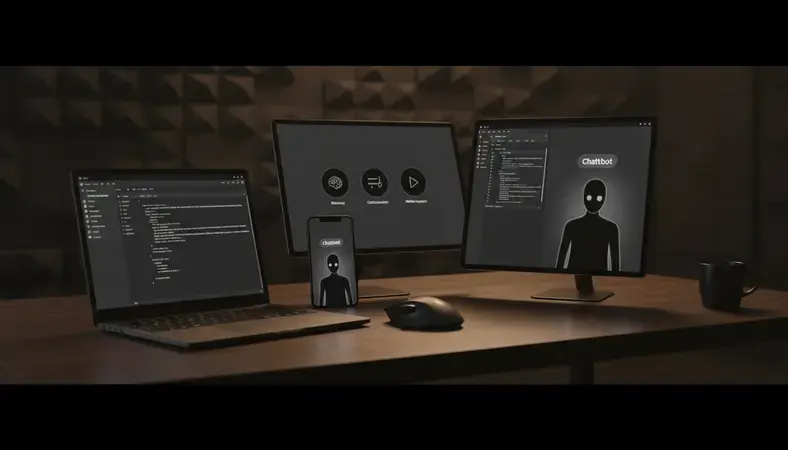
  • AI Conversation Bots vs Chatbots: Who Prevails?

    AI Conversation Bots vs Chatbots: Who Prevails?

    AI conversation bots have completely transformed how we interact with automated systems. Unlike traditional rule-based chatbots that follow rigid scripts, AI conversation bots use machine learning to understand context, remember previous interactions, and generate human-like responses. If you're deciding between implementing an AI conversation bot or sticking with traditional chatbots, this comparison breaks down exactly when each option makes sense.

    Split screen comparison showing traditional chatbot interface with rigid menu options versus AI conversation bot with natural dialogue flow

    What Is an AI Conversation Bot?

    An AI conversation bot is an artificial intelligence system designed to engage in natural, contextual conversations with users. These bots use advanced natural language processing (NLP) and machine learning algorithms to understand user intent, maintain conversation context, and generate appropriate responses that feel genuinely human.

    The key difference lies in adaptability. While traditional chatbots follow predetermined decision trees, AI conversation bots learn from each interaction and can handle unexpected questions or requests outside their original programming.

    Key Insight: AI conversation bots don't just respond to keywords—they understand the meaning behind what users are saying and can maintain context across multiple exchanges.

    How AI Conversation Bots Work

    AI conversation bots operate through several sophisticated layers working together:

    • Natural Language Understanding (NLU): Processes user input to extract meaning, intent, and relevant entities
    • Context Management: Maintains conversation history and understands references to previous exchanges
    • Response Generation: Creates appropriate replies using large language models trained on vast datasets
    • Learning Mechanisms: Continuously improves through user interactions and feedback loops

    The magic happens when these components work together. When you ask an AI conversation bot "What's the weather like?" followed by "How about tomorrow?", it understands that "tomorrow" refers to tomorrow's weather forecast—something traditional chatbots struggle with.

    Flowchart showing AI conversation bot processing pipeline from user input through NLU, context analysis, and response generation

    AI Conversation Bot vs Traditional Chatbots

    Comparison of Chatbot Technologies

    Feature Traditional Chatbot AI Conversation Bot
    Response Method Rule-based decision trees Machine learning and NLP
    Context Awareness Limited to current exchange Maintains full conversation history
    Flexibility Rigid, predetermined paths Adaptive, handles unexpected queries
    Setup Complexity Simple configuration Requires training and tuning
    Cost Lower initial investment Higher development and operational costs
    Accuracy High for scripted scenarios High for natural conversations

    The fundamental difference comes down to intelligence versus efficiency. Traditional chatbots excel at handling straightforward, predictable interactions quickly and cost-effectively. AI conversation bots shine when dealing with complex, nuanced conversations that require understanding and adaptation.

    When Traditional Chatbots Still Win

    Traditional chatbots remain the better choice for specific scenarios:

    • Simple FAQ handling: When users need quick answers to common questions
    • Form collection: Gathering structured information like contact details or preferences
    • Menu navigation: Helping users find specific pages or information on websites
    • Budget constraints: When cost is the primary concern and interactions are predictable

    When AI Conversation Bots Excel

    AI conversation bots become essential when you need:

    • Complex problem-solving: Handling multi-step issues that require back-and-forth dialogue
    • Personalized experiences: Adapting responses based on user history and preferences
    • Natural conversation flow: Creating interactions that feel genuinely human
    • Emotional intelligence: Understanding and responding to user sentiment and tone

    Types of AI Conversation Bots

    The AI conversation bot landscape includes several distinct categories, each optimized for different use cases:

    Customer Service Bots

    These bots handle support tickets, troubleshoot problems, and escalate complex issues to human agents. They excel at understanding customer frustration and providing empathetic responses while working toward solutions.

    Sales and Lead Generation Bots

    Designed to qualify prospects, answer product questions, and guide potential customers through the sales funnel. They can adapt their approach based on user responses and buying signals.

    Personal Assistant Bots

    These comprehensive AI systems help with scheduling, reminders, information lookup, and task management. They learn user preferences over time and proactively offer assistance.

    Specialized Industry Bots

    Healthcare bots for symptom checking, financial bots for account management, and educational bots for personalized learning all represent AI conversation bots trained for specific domains.

    Best AI Conversation Bots Available

    The market offers several standout AI conversation bot platforms, each with distinct strengths:

    Enterprise-Level Solutions

    • ChatGPT API Integration: Offers the most advanced conversational abilities but requires custom development
    • Microsoft Bot Framework: Provides robust enterprise features with Azure integration
    • Google Dialogflow CX: Excels at complex conversation flows with strong analytics

    Small Business Options

    • Chatfuel: User-friendly platform with AI capabilities and social media integration
    • ManyChat: Strong marketing automation features combined with conversational AI
    • Tidio: Affordable option that blends live chat with AI conversation capabilities

    Specialized Platforms

    • Ada: Focuses specifically on customer service with advanced resolution tracking
    • Drift: Sales-oriented conversational AI with strong lead qualification features
    • Intercom: Combines customer support and marketing automation in one platform

    Dashboard screenshots showing different AI conversation bot interfaces and their unique features

    Use Cases for AI Conversation Bots

    AI conversation bots excel across numerous applications where natural dialogue creates better user experiences:

    E-commerce and Retail

    Online stores use AI conversation bots to provide personalized product recommendations, handle returns and exchanges, and guide customers through complex purchase decisions. These bots can understand preferences like "I need a gift for my tech-savvy brother under $100" and provide relevant suggestions.

    Healthcare and Wellness

    Medical practices deploy AI conversation bots for appointment scheduling, symptom pre-screening, and medication reminders. The bots can ask follow-up questions to gather complete information while maintaining a caring, professional tone.

    Financial Services

    Banks and fintech companies use AI conversation bots for account inquiries, fraud detection, and financial advice. These bots can explain complex financial products in simple terms and adapt explanations based on user knowledge level.

    Education and Training

    Educational institutions implement AI conversation bots as tutoring assistants, course advisors, and administrative helpers. They can adjust their teaching style based on student responses and learning patterns.

    How to Choose an AI Conversation Bot

    Selecting the right AI conversation bot requires evaluating several critical factors:

    Define Your Requirements

    Start by identifying specific use cases and conversation complexity levels you need to handle. Simple FAQ responses might not justify an advanced AI solution, while complex customer service scenarios definitely do.

    Evaluate Integration Capabilities

    Consider how the bot will connect with your existing systems—CRM, helpdesk, e-commerce platform, or databases. Seamless integration prevents data silos and enables more personalized interactions.

    Assess Training Requirements

    Different platforms require varying levels of training data and ongoing maintenance. Some offer pre-trained models for common use cases, while others require extensive customization.

    Budget for Total Cost of Ownership

    Factor in development costs, monthly platform fees, API usage charges, and ongoing training expenses. The cheapest option initially might become expensive as usage scales.

    Test Conversation Quality

    Most platforms offer free trials or demos. Test how well they handle your specific conversation scenarios, including edge cases and unexpected user inputs.

    Flowchart showing decision points for choosing between different AI conversation bot types based on business needs

    Common Questions About AI Conversation Bots

    What's the difference between chatbot AI and conversational AI?

    Chatbot AI typically refers to basic automated chat systems that may use simple AI for keyword recognition. Conversational AI represents more advanced systems that understand context, maintain dialogue state, and generate human-like responses. Think of chatbot AI as the broader category, with conversational AI being the more sophisticated subset.

    Can AI conversation bots replace human customer service?

    AI conversation bots excel at handling routine inquiries, providing 24/7 availability, and qualifying issues before human handoff. However, they work best as part of a hybrid approach where complex emotional situations, nuanced problem-solving, and relationship building remain with human agents.

    How do I know if my business needs an AI conversation bot?

    Consider an AI conversation bot if you're dealing with high conversation volume, need 24/7 availability, want to provide personalized experiences, or find that traditional chatbots can't handle your users' questions effectively. The investment makes sense when conversation complexity justifies the additional capabilities.

    What makes the best AI chatbot app different from others?

    The best AI chatbot apps distinguish themselves through superior natural language understanding, robust context management, seamless integration capabilities, and continuous learning from interactions. They also provide comprehensive analytics to help you understand user behavior and improve conversation flows.

    Are there good free AI chatbot options?

    Several platforms offer free tiers with limited functionality, including basic versions of Chatfuel, ManyChat, and some open-source solutions. However, truly advanced conversational AI capabilities typically require paid plans due to the computational resources needed for natural language processing.

    How do AI conversation bots learn and improve?

    AI conversation bots improve through multiple mechanisms: analyzing successful conversation patterns, learning from user feedback, processing new training data, and adapting to changing user behavior. The best systems combine supervised learning from human feedback with unsupervised learning from conversation logs to continuously enhance their performance.

    Key Takeaways

    AI conversation bots represent a significant evolution beyond traditional chatbots, offering natural dialogue capabilities that create genuinely helpful user experiences. Choose traditional chatbots for simple, predictable interactions where cost matters most. Invest in AI conversation bots when you need context awareness, personalization, and the ability to handle complex conversations.

    Experience advanced AI conversation technology at JustSext — chat instantly with AI companions that understand context, remember your preferences, and provide personalized interactions that feel genuinely human. Ready to get started? Visit JustSext to learn more.
  • How to Use an AI Chat Bot (Step by Step)

    How to Use an AI Chat Bot (Step by Step)

    An AI chat bot can handle customer questions 24/7, book appointments, and even process orders without human intervention. If you're tired of missing leads while you sleep or want to free up your team from repetitive questions, this guide walks you through exactly how to set up and use an AI chat bot that actually works.

    Setting up your first AI chat bot takes about 30 minutes, and the results can transform how you handle customer interactions. You'll learn what AI chat bots can do, how to choose the right one, and step-by-step instructions to get yours running.

    Modern AI chatbot interface on computer screen with conversation bubbles and automated responses

    What Is an AI Chat Bot?

    An AI chat bot is software that uses artificial intelligence to have conversations with people through text or voice. Think of it as a digital assistant that never sleeps, never gets frustrated, and can handle hundreds of conversations at once.

    Unlike traditional customer service where humans answer every question, an AI chat bot uses natural language processing to understand what people are asking and responds with relevant, helpful answers. The best ones learn from each interaction, getting smarter over time.

    Key Insight: Modern AI chat bots can handle up to 80% of routine customer questions without any human involvement, freeing your team to focus on complex issues that require personal attention.

    These systems work by analyzing the text someone types, identifying the intent behind their message, and pulling from a knowledge base to provide accurate responses. When they encounter something they can't handle, they seamlessly transfer the conversation to a human agent.

    How Do AI Chatbots Work?

    AI chatbots operate through a combination of natural language processing (NLP), machine learning, and predefined conversation flows. When someone sends a message, the system breaks down the text to understand what the person actually wants.

    The process happens in milliseconds:

    1. Text Analysis: The bot examines the incoming message for keywords, context, and intent
    2. Pattern Recognition: Machine learning algorithms compare the message to thousands of previous conversations
    3. Response Generation: The system selects or creates an appropriate response based on its training
    4. Continuous Learning: Each interaction teaches the bot to handle similar questions better in the future

    Most AI chat bots use transformer models similar to what powers ChatGPT, but they're trained specifically for customer service scenarios. This specialized training helps them understand business-specific language and provide more accurate responses than general-purpose AI.

    The Technology Behind AI Chat Bots

    Component What It Does Why It Matters
    Natural Language Processing Understands human language patterns Enables natural conversations instead of rigid commands
    Machine Learning Improves responses over time Gets better at helping customers without manual updates
    Knowledge Base Stores information and answers Provides consistent, accurate responses to common questions
    Intent Recognition Identifies what customers actually want Routes conversations to the right solution or human agent

    The magic happens when these components work together. A customer might ask "When do you close?" and the bot understands they want business hours, even though they didn't use the exact phrase "business hours" or "opening times."

    Types of AI Chatbots

    Not all AI chat bots are created equal. Understanding the different types helps you choose the right solution for your specific needs.

    Rule-Based Chatbots follow predetermined conversation trees. When someone asks a question, the bot matches it to predefined responses. These work well for simple, predictable interactions like checking account balances or store hours.

    AI-Powered Chatbots use machine learning to understand context and generate responses dynamically. They can handle complex questions, understand slang, and even maintain context across multiple messages in a conversation.

    Hybrid chatbots combine both approaches. They use AI for complex interactions but fall back to rule-based responses for specific tasks like processing orders or booking appointments.

    Voice-Enabled Chatbots handle spoken conversations instead of text. These are becoming popular for phone systems and smart speakers, offering hands-free customer service.

    Choosing the Right Type for Your Business

    • Small businesses with simple needs: Rule-based chatbots handle basic questions cost-effectively
    • E-commerce sites: Hybrid chatbots can process orders while answering product questions
    • Service businesses: AI-powered chatbots excel at scheduling and customer support
    • Enterprise companies: Voice-enabled chatbots integrate with existing phone systems

    The key is matching the bot's capabilities to your actual customer interactions. A restaurant might need appointment booking, while a software company needs technical support capabilities.

    Side-by-side comparison of different chatbot types with features and capabilities

    AI Chatbot vs Traditional Customer Service

    Traditional customer service relies entirely on human agents working specific hours. Customers call, email, or visit during business hours, and agents handle each interaction manually. This approach works but has clear limitations.

    AI chatbots operate 24/7 without breaks, sick days, or vacation time. They can handle multiple conversations simultaneously and provide instant responses. However, they struggle with complex emotional situations or unique problems that require human judgment.

    Cost and Efficiency Comparison

    Aspect Traditional Service AI Chatbot Hybrid Approach
    Availability Business hours only 24/7/365 24/7 with human backup
    Response Time 2-5 minutes average Instant Instant for simple, fast for complex
    Simultaneous Conversations 1 per agent Unlimited Unlimited simple, limited complex
    Training Time Weeks to months Pre-trained Minimal additional training
    Emotional Intelligence High Limited High when needed
    Cost per Interaction $5-15 $0.10-0.50 $1-3

    The most successful businesses use AI chatbots to handle routine questions while keeping human agents available for complex issues. This hybrid approach delivers the best customer experience at a reasonable cost.

    When AI Chatbots Excel: * Answering frequently asked questions * Processing simple transactions * Providing product information * Scheduling appointments * Collecting customer information

    When Human Agents Are Essential: * Handling complaints or emotional situations * Solving unique or complex problems * Making judgment calls about policies * Building relationships with high-value customers

    Benefits and Limitations of AI Chatbots

    AI chatbots deliver measurable benefits that can transform your customer service operations. Companies using artificial intelligence for customer service report 67% faster response times and 30% lower operational costs.

    Key Benefits

    24/7 Availability: Your customers don't keep business hours. AI chatbots handle questions at 3 AM just as effectively as 3 PM, capturing leads and solving problems when your team is offline.

    Instant response times: No more waiting on hold. Customers get immediate acknowledgment and often complete resolution within seconds of asking their question.

    Consistent service quality: Human agents have good days and bad days. AI chatbots deliver the same level of service every time, following your brand guidelines and company policies without variation.

    Scalability: Whether you get 10 questions or 10,000, the bot handles them all without additional hiring or training costs.

    Data collection: Every conversation generates valuable insights about customer needs, common problems, and service gaps you can address.

    Honest Limitations

    Limited emotional intelligence: AI chatbots can recognize frustrated language but can't provide the empathy and understanding that human agents offer during difficult situations.

    Complex problem solving: When customers have unique situations or multi-step problems, chatbots often struggle to provide satisfactory solutions.

    Context understanding: While improving rapidly, AI can still misunderstand context, especially with sarcasm, cultural references, or industry-specific jargon.

    Setup and Maintenance: Effective chatbots require initial configuration, ongoing training, and regular updates to remain accurate and helpful.

    Bottom Line: AI chatbots excel at handling routine interactions efficiently, but they work best as part of a customer service strategy that includes human agents for complex situations.

    Infographic showing AI chatbot benefits with statistics and visual representations

    Popular AI Chatbot Examples

    Understanding what successful AI chatbots look like in practice helps you set realistic expectations and identify features you want in your own implementation.

    Sephora's Virtual Assistant helps customers find products by asking about skin type, preferred brands, and beauty goals. Instead of browsing hundreds of products, customers get personalized recommendations in minutes.

    Domino's Pizza Bot handles the entire ordering process through Facebook Messenger. Customers can reorder previous purchases, customize pizzas, and track delivery status without calling or visiting the website.

    Bank of America's Erica serves 32 million customers with banking tasks like checking balances, paying bills, and providing spending insights. The bot handles routine transactions while escalating complex issues to human representatives.

    H&M's Style Bot acts as a personal stylist, asking about occasions, preferred styles, and budget to recommend complete outfits. Customers can browse, save favorites, and purchase directly through the chat interface.

    Spotify's Music Bot helps users discover new music by understanding mood, activity, and listening history. It creates custom playlists and explains why certain songs were included.

    What Makes These Chatbots Successful

    • Clear Purpose: Each bot solves a specific problem rather than trying to do everything
    • Seamless Integration: They work within platforms customers already use daily
    • Fallback Options: When the bot can't help, customers easily reach human agents
    • Continuous Improvement: The companies regularly update responses based on customer feedback
    • Brand Consistency: The bot's personality matches the company's overall brand voice

    These examples show AI chatbots working best when they focus on specific, repetitive tasks that benefit from automation while maintaining easy access to human help when needed.

    How to Choose an AI Chatbot

    Selecting the right AI chatbot requires matching features to your specific business needs rather than choosing based on popularity or price alone. Start by identifying what you want the bot to accomplish.

    Step 1: Define Your Goals

    Customer support: Do you want to reduce response times for common questions? Lead generation: Should the bot qualify prospects and collect contact information? Sales assistance: Will it help customers find products and complete purchases? Appointment scheduling: Does your business need automated booking capabilities?

    Write down your top 3 goals before evaluating any platforms. This prevents feature creep and helps you focus on solutions that deliver real value.

    Step 2: Evaluate Integration Requirements

    Your chatbot needs to work with your existing systems. Check compatibility with:

    • Website Platform: WordPress, Shopify, Squarespace, or custom sites
    • CRM System: Salesforce, HubSpot, or other customer management tools
    • Communication Channels: Website chat, Facebook Messenger, WhatsApp, SMS
    • Payment Processing: Stripe, PayPal, or your current payment system
    • Analytics Tools: Google Analytics, customer service metrics, or business intelligence platforms

    Poor integration creates data silos and forces customers to repeat information across different systems.

    Step 3: Consider Implementation Complexity

    No-Code Solutions like Chatfuel or ManyChat offer drag-and-drop interfaces that non-technical users can manage. These work well for small businesses with straightforward needs.

    Low-Code Platforms such as Microsoft Bot Framework provide more customization but require some technical knowledge. They suit growing businesses that need specific features.

    Custom development gives complete control but requires significant time and technical expertise. Large enterprises with unique requirements often choose this path.

    Step 4: Budget for Total Cost of Ownership

    Look beyond monthly subscription fees:

    • Setup Costs: Initial configuration, integration, and training
    • Ongoing Maintenance: Content updates, performance monitoring, and improvements
    • Human Backup: Agents to handle escalated conversations
    • Additional Features: Advanced analytics, multiple languages, or custom integrations

    Decision flowchart showing steps to choose the right AI chatbot for different business needs

    Key Features to Prioritize

    Feature Essential For Skip If
    Natural Language Processing Complex customer questions Simple FAQ responses only
    Multi-Channel Support Customers use various platforms Website chat is sufficient
    Analytics Dashboard Measuring performance and ROI Very small operation
    Human Handoff Complex products or services Purely informational bot
    Customizable Responses Brand voice consistency Generic responses acceptable
    API Integrations Existing business systems Standalone operation

    The best chatbot for your business balances functionality with simplicity. A feature-rich platform that's too complex for your team to manage won't deliver the results you want.

    Common Questions About AI Chatbots

    How much does an AI chatbot cost?

    AI chatbot costs range from free basic plans to enterprise solutions costing thousands monthly. Simple rule-based bots start around $20-50 per month, while advanced AI-powered systems typically cost $100-500 monthly for small to medium businesses.

    Enterprise solutions can reach $2,000-10,000 monthly but include advanced features like multi-language support, complex integrations, and dedicated account management. Factor in setup costs ($500-5,000) and ongoing maintenance when budgeting.

    The key is calculating return on investment. If your chatbot handles 100 customer inquiries daily that would otherwise require human agents at $15 per interaction, you're saving $1,500 daily even with a $500 monthly bot subscription.

    Can AI chatbots understand different languages?

    Most modern AI chatbots support multiple languages, but quality varies significantly. Popular platforms like Dialogflow and Microsoft Bot Framework offer 20+ languages with good accuracy for major languages like Spanish, French, and German.

    However, language support isn't just about translation. Cultural context, slang, and regional expressions affect how well bots understand and respond. Test thoroughly in your target languages before launching.

    For businesses serving diverse markets, consider starting with your primary language and adding others based on customer volume and feedback. This approach ensures quality while managing complexity.

    How long does it take to set up an AI chatbot?

    Basic chatbot setup takes 1-4 weeks depending on complexity and integration requirements. Simple FAQ bots can be operational in days, while sophisticated systems handling transactions and complex workflows need several weeks.

    The timeline typically breaks down as: * Planning and Design: 3-5 days to define goals and conversation flows * Platform Setup: 1-3 days for basic configuration * Content Creation: 5-10 days writing responses and training the AI * Integration Testing: 3-7 days connecting to existing systems * Staff Training: 2-3 days teaching your team to manage the bot

    Rushing the setup often leads to poor customer experiences. Invest time upfront in planning and testing to avoid problems after launch.

    What happens when the AI chatbot can't help a customer?

    Well-designed chatbots include escalation paths to human agents when they encounter situations beyond their capabilities. This handoff should be seamless, preserving conversation context so customers don't repeat their questions.

    Common escalation triggers include: * Explicit requests to speak with a human * Repeated failed attempts to understand the customer's question * Keywords indicating frustration or complex problems * Requests outside the bot's programmed capabilities

    The best practice is setting clear expectations. Tell customers upfront when they're chatting with a bot and how to reach human help if needed. Transparency builds trust and reduces frustration.

    How do you measure AI chatbot success?

    Track metrics that align with your business goals rather than vanity metrics like total conversations. Key performance indicators include:

    Resolution rate: Percentage of conversations the bot completes without human intervention Customer satisfaction: Ratings from post-chat surveys Response time: Average time from question to resolution Cost per Interaction: Total bot costs divided by successful interactions Lead quality: For sales bots, measure how many conversations convert to qualified prospects

    Monitor these metrics weekly and adjust your bot's responses based on patterns in failed interactions. Continuous improvement is essential for long-term success.

    Most platforms provide built-in analytics, but consider integrating with your broader business intelligence tools for comprehensive reporting across all customer touchpoints.

    The Bottom Line

    AI chat bots work best when they handle specific, repetitive tasks while seamlessly connecting customers to human agents for complex situations. Focus on solving real customer problems rather than implementing technology for its own sake.

    Start building your AI companion experience at JustSext — chat instantly with AI companions, get custom images, and enjoy personalized content tailored to your preferences. Ready to get started? Visit JustSext to learn more.