Artificial intelligence and chatbots have transformed how we interact with technology, from customer service to personal assistants. These digital companions can answer questions, solve problems, and even engage in complex conversations that feel remarkably human. If you've ever wondered how these systems work or why they're becoming essential tools across industries, this guide breaks down everything you need to know about ai and chatbots and their growing role in our digital lives.

What Are AI and Chatbots?
AI and chatbots represent two interconnected technologies that work together to create intelligent conversational experiences. Artificial Intelligence (AI) is the broader field of computer science focused on creating systems that can perform tasks typically requiring human intelligence—like understanding language, recognizing patterns, and making decisions.
A chatbot is a specific application of AI designed to simulate human conversation through text or voice interactions. Think of it as a digital assistant that can understand what you're asking and respond in a way that feels natural and helpful.
Key Insight: While all modern chatbots use some form of AI, not all AI systems are chatbots. AI powers everything from recommendation algorithms to autonomous vehicles, while chatbots specifically focus on conversation and communication.
The combination of ai and chatbots creates systems that can:
- Process natural language in real-time
- Learn from interactions to improve responses
- Handle multiple conversations simultaneously
- Provide 24/7 availability without human intervention
- Integrate with databases to access specific information
Modern ai and chatbots have evolved far beyond simple rule-based responses. Today's systems use machine learning, natural language processing, and neural networks to understand context, emotion, and intent behind human communication.
How Do Chatbots Work?
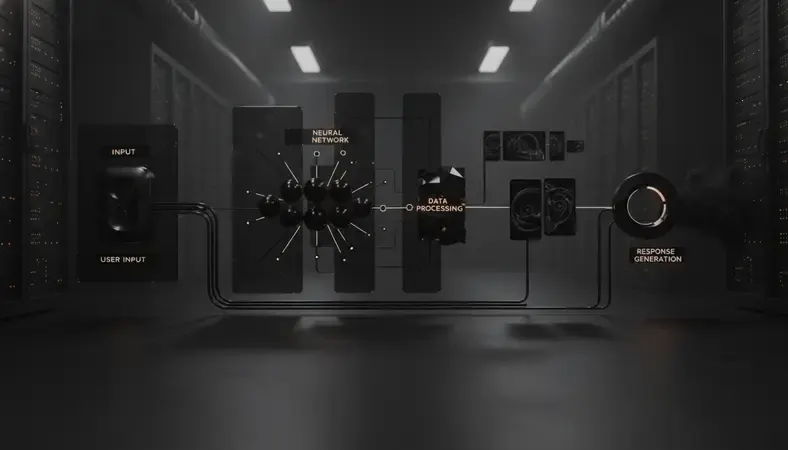
The magic behind ai and chatbots happens through several sophisticated processes working together. When you send a message to a chatbot, here's what occurs behind the scenes:
Natural Language Processing (NLP) serves as the foundation. The system breaks down your message into components it can understand—identifying keywords, analyzing grammar, and determining the overall meaning. This isn't just matching words; it's understanding context and intent.
Machine Learning algorithms then kick in to determine the most appropriate response. These systems have been trained on massive datasets of conversations, allowing them to recognize patterns and generate relevant replies. The more interactions they process, the better they become at understanding nuanced communication.
Knowledge bases and APIs provide the actual information. When you ask about business hours or product details, the chatbot queries connected databases to retrieve accurate, up-to-date information. This integration allows ai and chatbots to provide specific, actionable answers rather than generic responses.
The Processing Pipeline
- Input Analysis: Your message gets parsed for meaning, intent, and context
- Intent Recognition: The system determines what you're trying to accomplish
- Response Generation: AI creates or selects the most appropriate reply
- Output Delivery: The response gets formatted and sent back to you
Modern ai and chatbots can also maintain conversation history, allowing them to reference previous messages and provide continuity throughout longer interactions. This memory capability makes conversations feel more natural and reduces the need to repeat information.
Types of AI Chatbots
Understanding the different categories of ai and chatbots helps explain why some feel more sophisticated than others. Each type serves specific purposes and operates with varying levels of complexity.
Comparison of AI Chatbot Types
| Type | How It Works | Best Use Cases | Limitations |
|---|---|---|---|
| Rule-Based | Follows predetermined decision trees | Simple FAQ, basic support | Cannot handle unexpected questions |
| AI-Powered | Uses machine learning for responses | Complex customer service, sales | Requires significant training data |
| Hybrid | Combines rules with AI capabilities | Enterprise solutions, specialized domains | More expensive to develop and maintain |
| Generative AI | Creates original responses using large language models | Creative tasks, open-ended conversations | May generate inaccurate information |
Rule-based chatbots operate like sophisticated flowcharts. They follow predetermined paths based on keywords or button selections. While limited in flexibility, they excel at handling routine inquiries where consistency matters more than creativity.
AI-powered chatbots leverage machine learning to understand context and generate more dynamic responses. These systems can handle variations in how people phrase questions and provide more personalized interactions based on conversation history.
Hybrid systems combine the reliability of rules with the flexibility of AI. They use rule-based logic for critical processes while employing AI for more complex interactions. This approach offers the best of both worlds for many business applications.
Generative AI chatbots represent the newest category, using large language models to create original responses. These systems can engage in creative tasks, answer complex questions, and maintain sophisticated conversations across virtually any topic.
Applications of AI Chatbots
The versatility of ai and chatbots has led to widespread adoption across industries, transforming how organizations interact with customers and streamline operations.
Customer service remains the most common application. Companies use ai and chatbots to handle routine inquiries, process returns, and provide instant support outside business hours. These systems can resolve up to 80% of common customer questions without human intervention.
E-commerce and Sales benefit significantly from chatbot integration. These systems guide customers through product selection, answer questions about specifications, and even process orders. Advanced ai and chatbots can make personalized recommendations based on browsing history and preferences.
Healthcare applications are expanding rapidly. Chatbots help patients schedule appointments, provide medication reminders, and offer preliminary symptom assessment. While they don't replace medical professionals, they improve accessibility and reduce administrative burden.
Educational support represents another growing area. AI-powered tutoring systems provide personalized learning experiences, answer student questions, and offer practice exercises tailored to individual learning styles.
Industry-Specific Benefits
- Banking: Account inquiries, transaction history, fraud alerts
- Travel: Booking assistance, itinerary management, real-time updates
- Real Estate: Property searches, appointment scheduling, market information
- HR and Recruitment: Interview scheduling, benefits questions, policy clarification
The adult entertainment industry has also embraced ai and chatbots for creating personalized interactive experiences. Platforms like JustSext use advanced AI to provide customized conversations, generate personalized content, and offer 24/7 companionship through sophisticated chatbot technology.

Benefits and Limitations of Chatbots
Understanding both the advantages and constraints of ai and chatbots helps set realistic expectations for implementation and use.
Key Benefits
24/7 Availability stands out as perhaps the most significant advantage. Unlike human agents, ai and chatbots never need breaks, vacations, or sleep. This constant availability means customers can get help whenever they need it, regardless of time zones or business hours.
Scalability allows organizations to handle unlimited simultaneous conversations. A single chatbot can manage thousands of interactions at once, something impossible with human staff. This capability becomes particularly valuable during peak periods or viral marketing campaigns.
Cost efficiency makes ai and chatbots attractive for businesses. While initial development requires investment, operational costs remain minimal compared to maintaining large customer service teams. The return on investment often becomes apparent within months of implementation.
Consistency ensures every customer receives the same quality of information and service. Human agents may have off days or varying levels of product knowledge, but ai and chatbots deliver uniform responses based on their training and knowledge base.
Important Limitations
Context understanding remains challenging for many systems. While ai and chatbots excel at handling straightforward requests, they may struggle with complex, multi-part questions or situations requiring emotional intelligence.
Lack of Empathy can frustrate users dealing with sensitive issues. Although AI can recognize emotional cues, it cannot provide genuine empathy or emotional support the way human agents can.
Maintenance requirements often get overlooked. Effective ai and chatbots need regular updates, training data refinement, and system monitoring to maintain performance and accuracy.
Why It Matters: The most successful chatbot implementations combine AI efficiency with human oversight, using automation for routine tasks while escalating complex issues to human agents.
AI Chatbots vs Traditional Customer Service
The comparison between ai and chatbots and traditional human-based customer service reveals distinct advantages for each approach, suggesting that hybrid models often work best.
Response speed heavily favors ai and chatbots. While human agents may need time to research answers or consult supervisors, chatbots provide instant responses by accessing their knowledge bases immediately. This speed advantage becomes crucial for simple inquiries where customers expect quick resolution.
Handling volume represents another area where ai and chatbots excel. Human agents can typically manage 2-3 conversations simultaneously, while chatbots handle unlimited concurrent interactions without performance degradation.
Problem-Solving Complexity still favors human agents for nuanced situations. While ai and chatbots handle routine questions effectively, complex problems requiring creative solutions, emotional intelligence, or policy exceptions often need human intervention.
Cost considerations make ai and chatbots attractive for high-volume, low-complexity interactions. The cost per interaction drops significantly with chatbots, though human agents provide better value for complex, high-stakes conversations.
When to Choose Each Approach
Use AI Chatbots for: * Frequently asked questions * Order status checks * Basic troubleshooting * Appointment scheduling * Information retrieval
Use Human Agents for: * Complex technical issues * Emotional or sensitive situations * Policy exceptions * High-value customer interactions * Creative problem-solving
The most effective customer service strategies combine both approaches, using ai and chatbots for initial contact and routine issues while seamlessly transferring complex cases to human agents when needed.
The Future of AI and Chatbot Technology
The evolution of ai and chatbots continues accelerating, driven by advances in machine learning, natural language processing, and computing power. Several trends are shaping the future landscape of conversational AI.
Multimodal interactions will expand beyond text-based conversations. Future ai and chatbots will seamlessly integrate voice, images, video, and even gesture recognition to create more natural and intuitive interactions. This evolution will make chatbots accessible to users who prefer different communication methods.
Emotional intelligence improvements will help ai and chatbots better understand and respond to human emotions. Advanced systems will recognize frustration, excitement, or confusion in user messages and adjust their responses accordingly, creating more empathetic interactions.
Industry specialization will produce highly trained ai and chatbots for specific sectors. Medical chatbots will understand complex health terminology, legal chatbots will navigate regulatory requirements, and financial chatbots will handle sensitive monetary discussions with appropriate security measures.
Integration depth will expand as ai and chatbots connect with more business systems. Future implementations will access customer relationship management platforms, inventory systems, and analytics tools to provide more comprehensive and personalized service.
Emerging Capabilities
- Proactive Assistance: Chatbots that anticipate user needs and offer help before being asked
- Cross-Platform Continuity: Seamless conversations across multiple devices and channels
- Advanced Personalization: AI that adapts communication style to individual user preferences
- Real-Time Learning: Systems that improve during conversations rather than requiring batch training
The artificial intelligence field continues advancing rapidly, with new breakthroughs in language models and neural networks expanding what's possible with conversational AI.
Common Questions About AI and Chatbots
How accurate are AI chatbots compared to human agents?
Modern ai and chatbots achieve 85-95% accuracy for routine inquiries within their trained domains. However, accuracy varies significantly based on question complexity and training quality. Simple factual questions see the highest accuracy rates, while nuanced or contextual questions may require human intervention. The key is proper implementation with clear escalation paths to human agents when chatbot confidence drops below acceptable thresholds.
Can AI chatbots learn and improve over time?
Yes, most advanced ai and chatbots use machine learning algorithms that improve through interaction data. They analyze successful and unsuccessful conversations to refine their responses and better understand user intent. However, this learning process requires careful monitoring to prevent the system from adopting inappropriate responses or biases from user interactions.
Are AI chatbots secure for handling sensitive information?
Security depends entirely on implementation and compliance measures. Properly configured ai and chatbots can meet strict security standards including GDPR, HIPAA, and financial regulations. They use encryption, access controls, and audit trails to protect sensitive data. However, organizations must carefully evaluate their specific security requirements and ensure their chatbot provider meets necessary compliance standards.
What's the difference between a chatbot and a virtual assistant?
While the terms often overlap, chatbots typically focus on specific tasks or domains (like customer service), while virtual assistants offer broader capabilities across multiple functions. Virtual assistants like Siri or Alexa can control smart home devices, manage calendars, and perform various tasks, while chatbots usually specialize in conversation within particular contexts. The distinction continues blurring as ai and chatbots become more sophisticated.
How much does it cost to implement an AI chatbot?
Implementation costs vary widely based on complexity and customization needs. Simple rule-based systems might cost $10,000-$50,000, while sophisticated AI-powered solutions can range from $50,000-$500,000 or more. Ongoing costs include hosting, maintenance, training data updates, and potential licensing fees. Many businesses start with basic implementations and gradually add features as they see results and understand user needs better.
Do AI chatbots replace human jobs?
Ai and chatbots typically augment rather than replace human workers. While they handle routine tasks, humans focus on complex problem-solving, relationship building, and strategic work. Many organizations report that chatbot implementation leads to job evolution rather than elimination, with employees moving to higher-value activities that require creativity, empathy, and critical thinking skills that AI cannot replicate.
Wrapping Up
AI and chatbots represent a fundamental shift in how we interact with technology and businesses. From simple rule-based systems to sophisticated conversational AI, these tools continue evolving to provide more natural, helpful, and personalized experiences. Whether you're a business considering implementation or someone curious about the technology behind your daily digital interactions, understanding ai and chatbots helps you navigate our increasingly automated world more effectively.
Experience advanced AI conversation technology at JustSext — chat instantly with AI companions that provide personalized content, custom images, and engaging interactions tailored to your preferences. Ready to get started? Visit JustSext to learn more.
Leave a Reply